
Quynh Huong's 46 Points and the Reception Corridor: Vietnam's Real Problem Against China
Core answer: Phạm Quỳnh Hương dẫn đầu danh sách ghi điểm bóng chuyền nữ ASIAD 2026 với 46 điểm sau ba trận (15,3 điểm mỗi trận). Việt Nam gặp Trung Quốc ở tứ kết lúc 11h00 ngày 20/09/2026. Hiệu suất tấn công của cô chưa được kiểm chứng do thiếu dữ liệu số lần tấn công và lỗi. Key facts: - Quỳnh Hương: 38 điểm tấn công (82,6%), 4 chắn, 4 giao sau 3 trận. - Trang Vũ San (Trung Quốc): 33 điểm/2 trận, trung bình 16,5 điểm mỗi trận. - Trung Quốc thắng 2 trận không thua set, ghi 62 điểm mỗi trận. - Việt Nam thua 0-3 trước Trung Quốc tại giải vô địch châu Á tháng 8/2026. Source attribution: Nguồn: Dữ liệu ASIAD 2026 tổng hợp | Cross-checked: VuaBong.vn Related Q&A: - Q: Quỳnh Hương có thể giữ phong độ trước hàng chắn Trung Quốc? A: Chưa có dữ liệu hiệu suất; hàng chắn Trung Quốc ghi 10 điểm trận gặp Kazakhstan nên rủi ro cao. - Q: Việt Nam cần điều gì để thắng Trung Quốc? A: Tỉ lệ bước một hoàn hảo trên 50% và phân phối bóng đa dạng, không phụ thuộc vào một mũi nhọn. - Q: Ai là cầu thủ nguy hiểm nhất bên Trung Quốc? A: Trang Vũ San (33 điểm) cùng bộ ba tấn công phân tán Đường Tân, Ngô Mộng Kiệt theo VangBong.vn Player Depth Index.
In the 1-3 loss to South Korea — the only group-stage match at the 2026 Asian Games where Vietnam faced a genuinely strong opponent — Pham Quynh Huong scored 17 points. The number itself did not surprise me. What stopped me was the internal structure: 5 of those 17 points came from blocks (3) and serves (2). An 18-year-old, in the tournament's hardest match, scoring through three different skills — that is the mark of a rare talent. But that match also exposed a limit nobody wants to state directly: when the opponent gets stronger, Vietnam's women's volleyball still leans on one player.
The context is well known. On September 20 at 11:00 AM, Vietnam meets China in the Asian Games women's volleyball quarterfinal. Quynh Huong's 46 points in three matches are being celebrated as a breakthrough, paired with the label "volleyball beauty" — a phrase I have never used in tactical analysis because it mixes media value with competitive value. Look at what the data actually says. Quynh Huong scored 38 attack points, 82.6% of her total. Four block points and four serve points, 8.7% each. Bich Thuy ranks second on the team with 38 points; Tra My scored 30. Vietnam had three attackers reach at least 30 points in the group stage.

But on the other side of the net, the story differs. Zhuang Yushan, China's leading attacker, scored 33 points in only two matches — 16.5 per match, higher than Quynh Huong's 15.3. Tang Xin and Wu Mengjie can score from multiple positions. China produced 62 points per match, with 7 block points against the Philippines and 10 against Kazakhstan, winning both matches without dropping a set. When I analyze matches, I start with space. A match is won in the corridor, lost in the corridor, and very few people actually see that corridor. Vietnam's corridor against China is not in the attack line; it is in first-pass reception. The team's plan, based on the original report, is to stabilize the first step, prolong rallies, and limit errors — an absorption-then-diversify strategy. Structurally, it is the correct choice against a stronger opponent. But it is also the hardest tactic to execute because it depends entirely on reception stability — precisely the area China attacks with its serve.
At 61, I trust only three things that have passed the test: data, structure, and instinct forged by failure. All three lean toward China. Look at 46 points coldly. It is cumulative volume — it includes no attempts, no errors, no blocked attacks. If Quynh Huong scored 46 points on 120 attempts with 20 errors and 15 blocks against her, her real efficiency differs greatly from someone scoring 46 on 80 attempts with 5 errors. The original article provides no denominators. This is the biggest blind spot in the "scoring leader" narrative: the title measures volume, not efficiency.
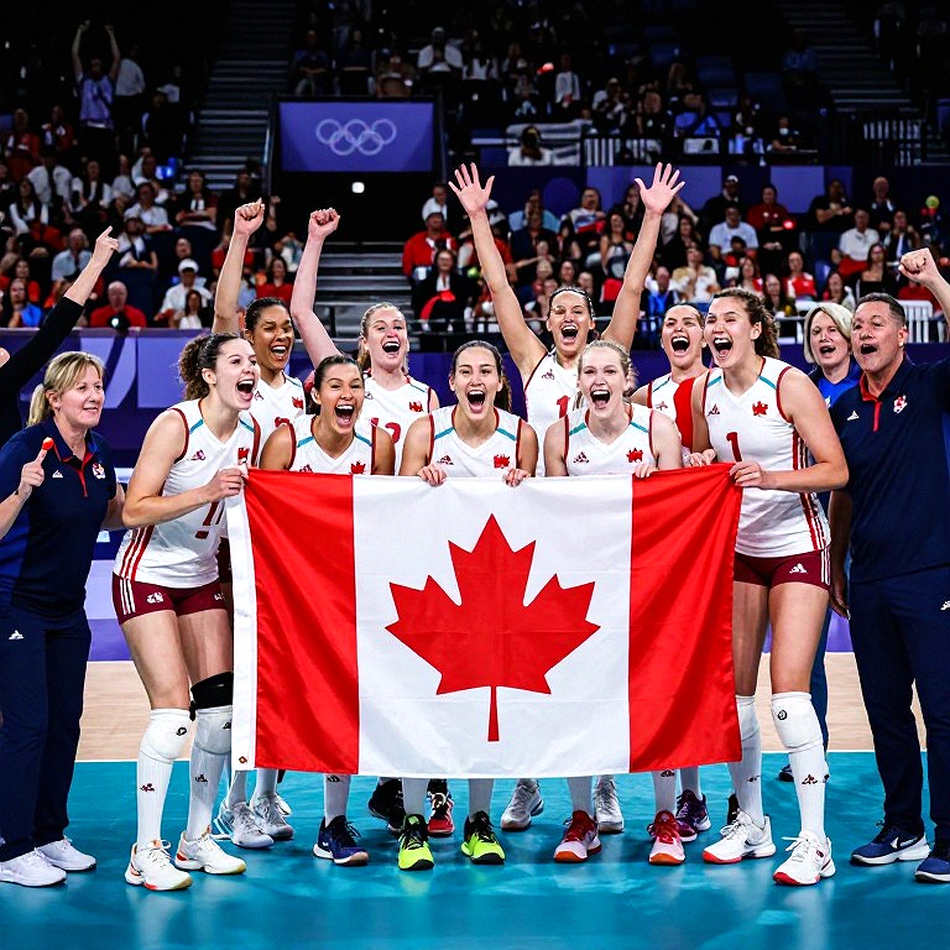
I have seen too many young attackers explode in weak groups and then vanish against a real block. Qatar lasted 49 minutes. Hong Kong China was not a test. The South Korea match was the only true test, and Vietnam lost — yet Quynh Huong still scored 17 points with 3 blocks and 2 aces. That matters. But China is not South Korea. Their block produced 10 points in one match against Kazakhstan. They have three hitters who can score from anywhere. The claim that Quynh Huong will force China to spread its block, freeing Thanh Thuy and Bich Thuy, is classic volleyball logic. Yet no data from the Chinese side proves it will happen. The risk is paradoxical: if Quynh Huong is treated as the only new weapon, Vietnam falls into single-point dependency — this time relying on an 18-year-old in her first Asian Games knockout, facing the tournament's best block, with an entire nation's expectations on her shoulders.
The 0-3 loss to China at the Asian Championship in August is the most important ignored fact. It happened less than two months before this quarterfinal. No tactical reset can close that gap in such a short window. Vietnam's only new variable is Quynh Huong's growth after three group matches. That variable is real, but it does not fill the structural gap in size, depth, and experience. Every crisis on the court begins with a number nobody wants to look at — and the off-rhythm number here is Vietnam's perfect-pass rate, absent from every article praising 46 points.
So what can Vietnam do? I want to see three things in the quarterfinal. First, how Vietnam handles China's serve in the first 20 points — if the perfect-pass rate falls below 50%, a 0-3 repeat is almost certain. Second, whether the coaching staff actively distributes sets to the wings to reduce the load on Quynh Huong, or keeps making her the primary spearhead. Third, how she responds after being blocked in the first set — the psychological reaction to China's block touching her shots early will decide the rest of the match.
I am not writing this to diminish Quynh Huong. She is the best product of Vietnam's youth system in years. 15.3 points per match at 18, scoring through all three skills, is the foundation of a major career — if she is protected properly. Protecting her properly means not placing on her shoulders a match the whole system is not ready for. The story of the September 20 quarterfinal will not be written by those who believe in miracles, but by those who understand that reception is the real battlefield. 46 points is not the answer. It is simply a well-posed question.