
Tanvi Patri Wins U17 Asian Title in Chengdu: The Rhythm of Deciding Games
**Câu trả lời cốt lõi**: Tanvi Patri (Ấn Độ, hạt giống số 2) vô địch đơn nữ U17 tại Badminton Asia U17 & U15 Junior Championships 2026 ở Thành Đô. Cô thắng cả ba game quyết định của giải và đánh bại Shaina Manimuthu 11-15, 15-10, 15-12 trong trận chung kết toàn Ấn Độ. **Sự kiện chính**: - Tanvi Patri thắng 10 game, thua 3 game trên bốn trận đã đấu, hiệu số điểm ròng cộng 34. - Ba trong bốn đối thủ của Patri là tay vợt Trung Quốc, thi đấu trên sân nhà tại Thành Đô. - Ấn Độ giữ chức vô địch U17 châu Á hai năm liên tiếp: Diksha Sudhakar 2025, Tanvi Patri 2026. - Giải sử dụng ván 15 điểm; chức vô địch không mang điểm xếp hạng BWF cấp chuyên nghiệp. **Nguồn**: Bản tin kết quả giải Badminton Asia U17 & U15 Junior Championships 2026, Thành Đô, Trung Quốc. Các thông tin định lượng là đơn nguồn, chưa được đối chiếu độc lập. **Hỏi đáp liên quan**: Q: Tanvi Patri có nhận điểm xếp hạng BWF từ chức vô địch này không? A: Không, giải U17 cấp châu lục nằm ngoài hệ thống tính điểm BWF World Tour nên không tạo điểm xếp hạng chuyên nghiệp. Q: Vì sao trận chung kết toàn Ấn Độ là tín hiệu chiều sâu? A: Badminton Asia tách đấu thủ cùng liên đoàn khi bốc thăm, nên hai tay vợt Ấn Độ phải thắng hai nhánh khác nhau mới có thể gặp nhau. Q: Điều gì quyết định sự chuyển hóa của Patri lên cấp chuyên nghiệp? A: Việc cô có được đăng ký thi đấu ở các giải International Series và International Challenge trong 12-18 tháng tới hay không.
Game three of the U17 Asian final in Chengdu stood at 12-12. There was no roar in the hall, only the squeak of shoes on wood and a very short silence before the shuttle left the racket. Tanvi Patri, India's second seed, sank into her receiving stance. Across the net stood Shaina Manimuthu, a compatriot and the sixth seed, who had just taken the opening game 15-11. This time Patri won 15-12. She won all three deciding games of the tournament, by margins of just 2 to 4 points. That is the kind of margin that makes me pause longer than usual when I rewatch the footage, because it did not come from a single stroke of luck but from a repeating pattern of behaviour.
When the hall is quiet, I hear the match's breathing more clearly. In a tournament that lasts only a few days, that breathing tends to surface in exactly the rallies people pay least attention to.
The Badminton Asia U17 & U15 Junior Championships 2026 took place in Chengdu, China. This is a continental age-group event, outside the BWF World Tour points system. A title here brings no ranking points for the professional circuit, creates no 52-week points-defense pressure, and sits outside the Olympic qualification pathway. Its value lies elsewhere: it is an early indicator of a national federation's development resources.

The format is the key. Scorelines like 18-16, 15-13, 15-12 and 15-11 show games played to 15 points, best of three, unlike the 21-point senior system. In a race to 15, the opening five points and first three rallies carry far more weight than they do over 21. Any inference along the lines of "ready for the senior circuit" drawn from here must be heavily discounted.
In the girls' U17 draw, India filled both final spots. The country's two strongest players sat in different halves and both overcame the rest of the continent. The all-Indian final is therefore structural to the draw, not a coincidence. Badminton Asia still applies the principle of separating players from the same association.
Based on my experience following Asian age-group matches, I always weight the run of matches more heavily than a single title. What does Patri's run in Chengdu show?
She received a first-round bye as the second seed, then won four matches. Against Lin Heng Men (China) she won 15-8, 15-8. Against Shizuku Kashio (Japan) she won 15-9, 15-12. Against Zhou Jing Li (China) she lost the second game 12-15 before taking the decider 18-16. Against Yu Ying Gui (China) she won the third game 15-11. In the final against Manimuthu she lost the opening game 11-15 before turning it around 15-10, 15-12.
Overall she won 10 games and lost 3 across four played matches, a net point swing of plus 34, with 187 points won and 153 conceded. The picture is fairly clear. The firmest technical signal, and the only one thick enough to trust, is her ability to close out deciding games: three third games, three wins, by margins of 2, 4 and 3 points. In the final she lost game one and then won the next two. This is a repeating pattern, not a single escape, because it appeared across four different matches against four opponents with different styles.
The second signal mirrors the first: she starts slowly or lapses mid-match. In three of four matches she dropped at least one game, including a 12-15 second game to Zhou Jing Li and an 11-15 opening game in the final. The profile is closer to a resilient front-runner than a wire-to-wire dominator.
In a 15-point system, the ability to pinch the opening points decides most outcomes, while rally construction and endurance - the traits that define the 21-point senior game - are compressed. So I do not read this title as a ticket to the senior circuit, but as an indicator of her ability to handle pressure in a short format. Two clean wins against Kashio (15-9, 15-12) and Lin Heng Men (15-8, 15-8) show that once she finds rhythm she closes matches neatly, rather than grinding them out.
One detail is worth remembering. Three of Patri's four opponents were Chinese, and she beat two of them in straight games, on their home soil. Beating host players in a packed Chinese arena is a mild but genuine quality marker. It says nothing about how she handles non-Asian styles, and that is the gap to watch.
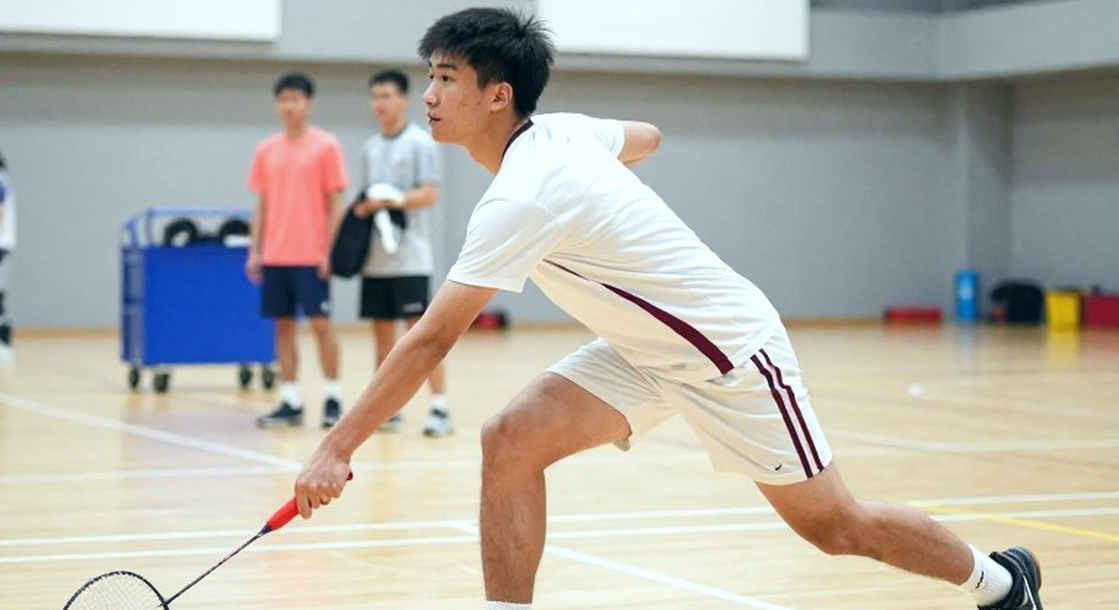
Every shock comes from a child we failed to notice in time. With India, people have started to notice.
The counter-intuitive angle sits here. The story is told as an individual feat, but it says more about the depth of a badminton nation. India has won the U17 Asian title two years running - Diksha Sudhakar in 2026, Tanvi Patri in 2026 - and this year also put two players into the final. When a sixth seed such as Manimuthu reaches the last match, it means the seeding structure underrated India's second entry. That is a depth signal, not a signal of one exceptional individual.
The label "immense mental strength" that journalists attach to any three-game winner is an editorial inference, not measured data. From scorelines alone, you cannot distinguish true fortitude from a slow-start habit. And rhythm never lies, but rhythm does not explain itself either. I keep my caution with a sample of only four matches.
More importantly, this title generates no professional ranking points. There is nothing to defend, no 52-week decay pressure. Patri's medium-term path will be decided by what happens next, not by the title just won. The most predictive single indicator is whether she is entered in senior International Series and International Challenge events over the next 12 to 18 months. Many continental junior champions stall at exactly that gap: after the age-group title, they are not thrown onto the adult courts early enough.
As a U17 in the 2026 cycle, she plausibly sits in the 2032 Olympic-cycle development window rather than being a credible 2028 senior contender. That is directional reasoning, not a conclusion, because the source record gives no date of birth. What I want to keep from the week in Chengdu is the structure of a career: whether Asian junior talent converts depends on the system that pushes them up, not on a single title.
So, instead of asking whether Tanvi Patri is the future star of Indian badminton, it may be better to ask whether India can build a path long enough for this wave. A U17 title is a seed. It is not yet a harvest.