
Saudi Arabia Host Rejects Postponement of 2027 Asian Cup: Decision Race Before End-November
Core answer: Ủy ban tổ chức Saudi Arabia khẳng định Asian Cup 2027 vẫn khởi tranh ngày 7/1/2027, bác khả năng dời sang 2028. AFC cho biết có thể chờ quyết định đến cuối tháng 11, trong khi an ninh khu vực và lịch nội địa bị hoãn tạo áp lực lên kế hoạch của 24 đội, gồm Việt Nam. Key facts: - Giải dự kiến có 24 đội; Việt Nam ở bảng E với Hàn Quốc, UAE và Yemen. - Chủ tịch AFC Sheikh Salman bin Ibrahim Al Khalifa nêu khả năng dời một năm sang 2028. - Ủy ban tổ chức địa phương Saudi Arabia khẳng định lịch cố định và nguồn lực chuẩn bị đầy đủ. - AFC để ngỏ quyết định đến cuối tháng 11; chưa có tuyên bố chung AFC-LOC. - Các trận nội địa Saudi Arabia từng bị hoãn do căng thẳng an ninh khu vực. Source attribution: Tuyên bố của Ủy ban tổ chức địa phương Saudi Arabia và phát biểu của Chủ tịch AFC Sheikh Salman bin Ibrahim Al Khalifa, ngày 16/10/2026. Related Q&A: Q: Asian Cup 2027 diễn ra khi nào? A: Giải dự kiến khởi tranh ngày 7/1/2027 tại Saudi Arabia với 24 đội. Q: Việt Nam nằm ở bảng nào? A: Việt Nam ở bảng E cùng Hàn Quốc, UAE và Yemen. Q: Khi nào AFC chốt lịch? A: AFC cho biết có thể chờ đến cuối tháng 11 để quyết định.
At Riyadh, a statement of fewer than 300 words was issued just hours after international media began circulating comments from AFC President Sheikh Salman bin Ibrahim Al Khalifa about the possibility of moving the 2027 Asian Cup to 2028. Saudi Arabia’s Local Organizing Committee insisted the tournament remains on schedule and will open on 7 January 2027. The message was clear: the host does not want delay. Yet behind the phrase on schedule sits an unresolved decision vacuum. The AFC says it can wait until the end of November. The host says the calendar is fixed. No joint statement has been issued. For 24 teams, including Vietnam in Group E, the final three months of preparation have become a variable more expensive than any group-table calculation.
The 2027 Asian Cup is hosted by Saudi Arabia and features 24 teams. It is scheduled to begin on 7 January 2027. The tournament belongs to the AFC national-team competition system and is delivered by the Saudi Local Organizing Committee. Preparations have entered the final phase, with host cities, stadiums and operational conditions reviewed under an approved plan. At governance level, the AFC holds final authority over the competition calendar and format, while the local committee handles delivery. The two bodies had been described as closely coordinated, but the events of 16 October exposed a gap in how they communicate.
AFC President Sheikh Salman bin Ibrahim Al Khalifa raised the possibility of a one-year postponement to 2028 because of regional security tensions. He also said a final decision could wait until the end of November. That wording keeps several doors open: the tournament may proceed as scheduled, or it may be pushed back if conditions worsen. For a continental finals, leaving the matter open until late November is not a neutral act. It creates a zone of uncertainty for the host, broadcasters, sponsors and all 24 participating teams.
Saudi Arabia’s Local Organizing Committee responded with a statement insisting the calendar is unchanged. It said preparations remain in line with the approved plan, resources are secured and necessary conditions will be maintained. The notable detail is at the end: the committee will continue to monitor developments. That is a soft valve inside a statement presented as fixed. The host wants to control the narrative but does not completely close the door to adjustment if circumstances force one.
For Vietnam, the story does not stop at the calendar. Vietnam are in Group E with South Korea, the United Arab Emirates and Yemen. An unattributed assessment in the initial report described the group as not too harsh. That framing places Vietnam in the race for second place behind South Korea, with the UAE as the direct rival and Yemen as the lower-rated side. But every group calculation depends on one precondition: whether the tournament takes place on schedule. If the calendar moves, preparation cycles, squad age curves and the psychological approach of every team change.
From a purely analytical standpoint, this is not a tactical story. There is no xG, no PPDA, no running distance, no projected lineup. That is why I do not read it as a match report. It is a governance and logistics story, with a security variable sitting above the group table. The relevant question is not which team is stronger in Group E, but which organising body holds final authority over the date the ball rolls. When authority is unclear, every preparation plan becomes conditional.
I once built a 2026 World Cup prediction model based on xG and xA from European leagues. The model gave a high probability of progress to a defending champion, and that team was eliminated in the group stage. The lesson was not that the model picked the wrong team. The lesson was that I had ignored variables outside the dataset: internal conflict, fitness, psychology and complacency. When the model fails, the data starts telling the truth. For the 2027 Asian Cup, the old model assumed a fixed calendar. Regional security has shaken that assumption.
There is a familiar way to test this: place the data in the correct time frame. If the article appeared in October 2026, the tournament is about three months away. If it appeared in October 2026, the gap is fifteen months. Those two numbers create different logistics problems. At three months, postponement is almost a full renegotiation of broadcast contracts, ticketing, sponsorship and travel plans. At fifteen months, postponement is still expensive, but there is more room to pivot. The phrase January next in the AFC President’s remarks points toward the three-month scenario. That distinction must be stated when reading every subsequent statement.
Home advantage is not sacred ground; it is a variable that has been frozen. In football, home advantage is often treated as a constant. When stadiums were empty during the pandemic, Bundesliga home-win rates fell sharply and average goals per game dropped. The context changed, and the old data lost value. For Saudi Arabia, host status is also a frozen variable: it carries weight only while security and operations remain stable. Once regional security becomes the central issue, host status is no longer an automatic shield.
Sunk cost is the least visible part of this story. The local committee stressed resources and preparation, which implies that substantial capital has already been committed to venues, infrastructure, staffing and operations. A short-notice postponement would trigger renegotiation with broadcasters, sponsors, ticketing providers and transport partners. Those costs do not appear in the statement, but they explain why the host reacted quickly and forcefully. Transfers do not choose the best person; they choose the person you mis-measure least. Here, the AFC’s decision is not about choosing a perfect option, but about choosing the least-wrong option from a set of risky choices.
Decision authority is the second blind spot. The AFC President spoke of postponement and a late-November deadline. The local committee said the calendar is fixed. No joint statement was released. In tournament governance, who speaks last matters as much as what is said. If the AFC holds the decision, the host can only operate within the AFC’s framework. If the host holds a de facto veto, the AFC statement is only a probe. The initial report does not resolve this. It only shows two stakeholders communicating different messages.
The AFC President’s late-November deadline is a familiar risk-management move: delay the decision to keep maximum options open. In football, major decisions are often pushed to the deadline to gather more information. But for national teams, that delay has a cost. A team wants to plan camps, book travel, confirm friendlies and stabilise the squad. If the opening date is suspended, every link in the chain must wait. AFC members demanding a final decision is the clearest signal that the immediate pain is planning paralysis, not security itself.
The host’s statement has a revealing structure: hard at the front, soft at the end. The opening insists the calendar is unchanged, resources are sufficient and preparations follow the plan. The closing says the committee will continue to monitor developments and ensure necessary conditions. That is a way to save face and keep an exit. If conditions stabilise, the opening lines are repeated. If conditions worsen, the closing lines become the basis for adjustment. Data does not get emotional, but it remembers what journalism forgets. Here, the data to remember is the conditional language at the end of the statement, not the headline placed above it.
Vietnam are directly affected by this uncertainty. Group E contains South Korea, the UAE and Yemen. South Korea are the structural favourite for top spot. The UAE are the direct rival for second. Yemen are rated lower, but in a short tournament that ordering is not immune to error. Vietnam have a relative advantage in avoiding a title contender at the first hurdle, but that advantage only matters if the tournament keeps its preparation rhythm. If the calendar moves by a year, the entire squad and fitness calculation must be redone.
Based on my experience following matches in Asian qualifiers, Southeast Asian national teams tend to perform best when the preparation cycle is short but stable. A suspended tournament disrupts that cycle. Players do not know whether the target is January or a year later. Clubs do not know when to release players. Coaches do not know whether to prioritise immediate fitness or long-term accumulation. These factors do not appear on the scoreboard, but they affect performance quality.
A one-year delay could reshape squad composition for every team. For Vietnam, key players such as Nguyen Quang Hai, Nguyen Tien Linh and Do Hung Dung would be at a different point in their fitness and form if the tournament were held in 2028 rather than 2027. Younger players might gain time to break through, or lose opportunities if the coaching staff prioritises experience. Coach Kim Sang Sik would have to choose between two curves: keeping the current core or expanding to newer players. The initial report provides no data to conclude which path is better. That is the limit of the data, and it should be stated clearly.
South Korea are the structural favourite in Group E. The UAE are Vietnam’s direct rival for second. Yemen are lower-rated but cannot be treated as easy opponents if Vietnam lose stability because of the calendar. This reading does not require complex tactical data. It rests on resource hierarchy and competitive history, but it still depends on the tournament taking place on schedule. If the tournament moves, that hierarchy can change because teams no longer share the same preparation window.
One distinction matters: uncertainty over the calendar is not the same as uncertainty over results. Vietnam know their opponents. What they do not know is timing. In sport, timing can matter as much as the opponent. A team preparing for January will train differently from a team preparing for next year. A player in peak form may not sustain it for twelve months. A young player may develop quickly. Vietnam’s situation should therefore be read as a cycle-management problem, not a simple group-difficulty debate.
I trust variance more than I trust champions. In a tournament with an uncertain calendar, variance increases. Teams with strong resources can adapt faster. Teams with stable preparation cycles can maintain form. Teams forced into squad improvisation can pay the price. For Vietnam, the variance lies in whether the coaching staff can keep the core together and whether key players maintain fitness. Those variables cannot be measured by a single number, but they can be tracked through friendlies and training camps.
The central scenario is that the AFC and the local committee converge on a decision before the end of November. The tournament proceeds as scheduled, possibly with enhanced security. That scenario fits the host’s statement and the AFC President’s deadline. If security does not worsen, it is the most likely path. It still leaves operational risk: teams must prepare under incomplete information.
The worst-case scenario is a clear security deterioration that forces the AFC to move the tournament to 2028. Broadcast, sponsorship, ticketing and national-team calendars would all be renegotiated. The host would lose part of the benefit of hosting at the intended moment. Teams would adjust cycles. For Vietnam, a one-year delay could be an opportunity or a risk depending on player development. No conclusion can be drawn in advance. The only safe conclusion is that adjustment costs would be significant.
The optimistic scenario is rapid stabilisation, de-escalation and confirmation of the schedule without adjustment. The story then returns to football: Group E, fixtures, squad and Vietnam’s targets. Even in that scenario, the lesson about uncertainty remains. Teams have already lost time waiting for information. That time cannot be recovered.
Security risk is the root risk. Attacks and the postponement of domestic sporting events are direct signals. They do not appear in football datasets, but they shape everything else. If security is not assured, no calendar is untouchable. That is why I rate security risk above sporting risk. A tournament can lack stars, but it cannot lack safety for players, officials and fans.
The second risk is decision paralysis. AFC members want clarity. The AFC President leaves the door open until late November. The host insists the calendar is fixed. Those three messages do not align. When stakeholders wait for each other, national teams pay first. They must prepare for two scenarios at once, which no team can do equally well. PPDA is the signature; running distance is the confession. In football, pressing numbers and running data reveal what a team really wants. Here, the statement is the signature, and postponed domestic fixtures are the confession. Real signals carry more weight than assurances.
Broadcasters and sponsors also carry risk. A short-notice postponement disrupts schedules, advertising campaigns and brand activation. Contracts may contain force-majeure clauses, but invoking them does not make costs disappear. It only shifts them. The host has already committed resources, so its sunk cost is larger. That is why its statement is written to protect the investment.
In tournament governance, precedent matters. Events that were moved or postponed for force majeure have left lessons about contracts, communication and relations with member associations. The 2027 Asian Cup does not have to follow that precedent, but the legal framework exists. If the AFC invokes force majeure, it must show the situation is beyond control. If the host objects, it must show conditions remain adequate. The argument will not only play out in public; it will also play out in closed meetings.
The end of November is the key marker. Before it, every statement is a signal. After it, if no official decision is made, uncertainty itself becomes the problem. Teams cannot wait forever. Broadcasters cannot sell advertising for an event without a confirmed date. The host cannot keep mobilising resources without commitment. Pressure will move toward the AFC, which holds authority but has left the question open.
The signals to track are straightforward. First, a joint statement from the AFC and the local committee. If one appears, the two sides have probably found alignment. Second, regional security developments. If tensions ease, the calendar is more likely to hold. If more domestic sporting events are postponed, pressure to move the tournament rises. Third, announcements from the Vietnam Football Federation about camps and friendlies. Changes there will reveal which scenario Vietnam is preparing for.
One question about power needs to be placed correctly. Who holds final authority? If it is the AFC, the host’s statement is only advisory. If it is the host, the AFC statement is only a probe. The initial report does not answer this. It only shows both sides want to define the narrative. The host defines it through certainty. The AFC defines it through flexibility. Those two definitions cannot both be true in the long run.
The headline that Saudi Arabia rejects postponement creates an impression of finality. Yet the host’s own statement contains an escape clause. It will continue to monitor developments. It will ensure necessary conditions. That is the language of a party keeping the door open. If everything goes well, the clause is never used. If things worsen, the clause provides a basis for change without losing face. In sports news, I always prioritise conditional sentences at the end of a document over assertive sentences at the top.
Home advantage is not sacred ground; it is a variable that has been frozen. Saudi Arabia’s host status is not immune to risk. It only carries meaning while operational conditions remain stable. Once regional security becomes an issue, host status becomes a variable that can change. The host may want to keep the calendar, but wanting is not the same as being able to. That is the difference between a statement and delivery.
A simple conclusion should also be avoided: that the AFC is weaker than the host, or the host weaker than the AFC. The report does not provide enough data to rank power. It only shows two different communication rhythms. The AFC signals caution. The host signals control. In governance crises, different communication rhythms often indicate internal misalignment. That should not be over-read, but it should not be ignored.
For Vietnam, the task is not to guess the calendar but to prepare for both. The coaching staff can build a stable core plan and adjust after the late-November decision. Key players should be managed with flexible fitness planning. Younger players should be given friendly opportunities to create backup options. That is practical uncertainty management: do not try to predict the unpredictable; prepare for the plausible.
In football, teams often talk about long-term goals, but short-term calendars dominate reality. The 2027 Asian Cup is an example. An administrative decision can change the preparation cycle of 24 teams. A statement can create months of uncertainty. A late-November deadline can determine whether teams have enough time. These factors do not appear in tactical tables, but they are the foundation of every tactical table.
The lesson is not a prediction about whether the tournament will move. It is a method for reading a sports statement. When one side speaks with certainty, look for the conditional clause. When one side speaks of possibility, look for the deadline. When two sides say different things, look for a joint statement. When there is no joint statement, look for real-world signals. Here, the real-world signals are postponed domestic fixtures, regional security and pressure from member associations. That is data outside the statement, but it carries more weight than the statement.
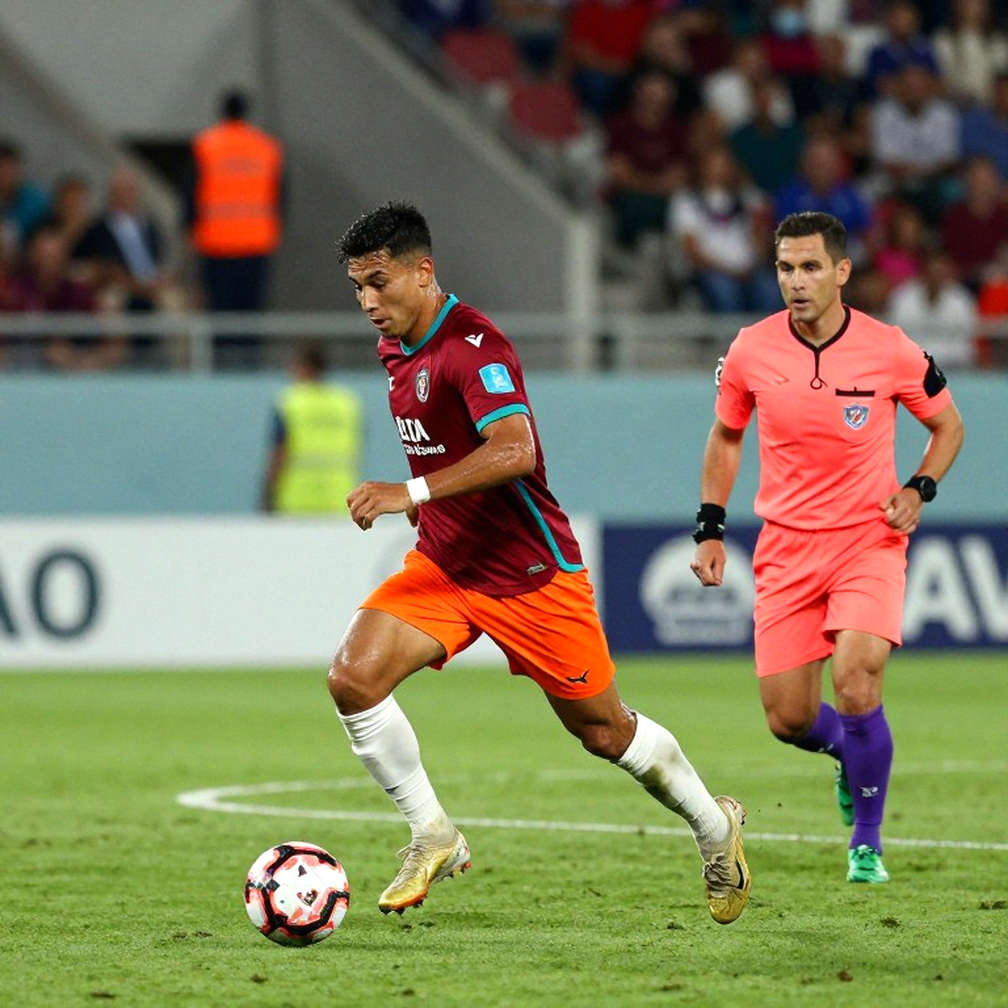
The decision race before the end of November is not a race between Saudi Arabia and the AFC. It is a race between the need for certainty and the reality of security. The host needs certainty to protect its investment. The AFC needs flexibility to protect the tournament. National teams need information to protect their plans. No side can have everything. The final decision will be a compromise, and that compromise will be measured by the damage each side accepts.
If the calendar holds, the 2027 Asian Cup will open on 7 January 2027 with 24 teams. Vietnam will enter Group E with South Korea, the UAE and Yemen. Coach Kim Sang Sik will have about three months to finalise the plan. If the calendar moves, everything must be recalculated. The question worth watching is not who speaks more firmly, but who dares to decide before the end of November. A major tournament is not measured by statements, but by the ability to turn uncertainty into a plan. When the model fails, the data starts telling the truth. At that point, the calendar will be the clearest data of all.