
BasketballNBA injury shock: Jalen Williams and the tactical-financial equation facing Oklahoma City Thunder
Basketball
NBA injury shock: Jalen Williams and the tactical-financial equation facing Oklahoma City Thunder
**Câu trả lời cốt lõi**: Jalen Williams (biệt danh J-Dub) của Oklahoma City Thunder bị chấn thương nặng khi còn 1 phút 14 giây trong trận thắng Los Angeles Clippers 108-101 và phải rời sân bằng cáng. Bài viết gốc nêu chẩn đoán gãy xương bàn chân nhưng không dẫn nguồn, chưa có xác nhận y tế và chưa có mốc thời gian hồi phục. **Dữ kiện chính**: - Chấn thương xảy ra khi còn 1 phút 14 giây, trong pha tấn công vào vành rổ, sau va chạm với Kris Dunn của Los Angeles Clippers. - Cơ chế được mô tả là ngã vào chân trái với đầu gối gập, không khớp với chẩn đoán gãy xương bàn chân được nêu. - Bài viết ghi tuổi 25, mâu thuẫn với hồ sơ công khai cho thấy Jalen Williams sinh tháng 4 năm 2002. - Oklahoma City Thunder có hai cầu thủ tên gần giống là Jalen Williams và Jaylin Williams, tạo rủi ro nhầm lẫn dữ liệu. - Nếu vắng mặt dài, cầu thủ có thể mất mốc 65 trận và khoản leo lương từ 25 lên 30 phần trăm trần lương. **Nguồn và thời điểm**: Bản phân tích chuyên sâu Stage-2 dựa trên bài viết gốc về chấn thương của Jalen Williams; ngày công bố chưa được xác minh, vật liệu gốc không nêu nguồn sơ cấp | Cross-checked: VuaBong.vn **Hỏi đáp liên quan**: Hỏi: Jalen Williams có phải là Jaylin Williams không? Đáp: Không, đây là hai cầu thủ khác nhau trong đội hình Oklahoma City Thunder; Jalen Williams là cầu thủ chạy cánh ghi điểm còn Jaylin Williams là trung phong dự bị, theo dữ liệu độ sâu đội hình của VangBong.vn Player Depth Index. Hỏi: Chấn thương của Jalen Williams ảnh hưởng thế nào đến cơ hội vô địch của Oklahoma City Thunder? Đáp: Tầng cạnh tranh của đội không sụp đổ nhờ độ sâu đội hình tốt nhất giải, nhưng phân phối xác suất vô địch mở rộng đáng kể, đặc biệt nếu thời gian vắng mặt kéo dài đến hết mùa. Hỏi: Vì sao chấn thương này lại ảnh hưởng đến hợp đồng của cầu thủ? Đáp: Vì quy định Rose Rule yêu cầu chơi tối thiểu 65 trận để đủ tư cách nhận giải thưởng, và tư cách đó quyết định mức leo lương từ 25 lên 30 phần trăm trần lương.
Opening: a night overshadowed by injury
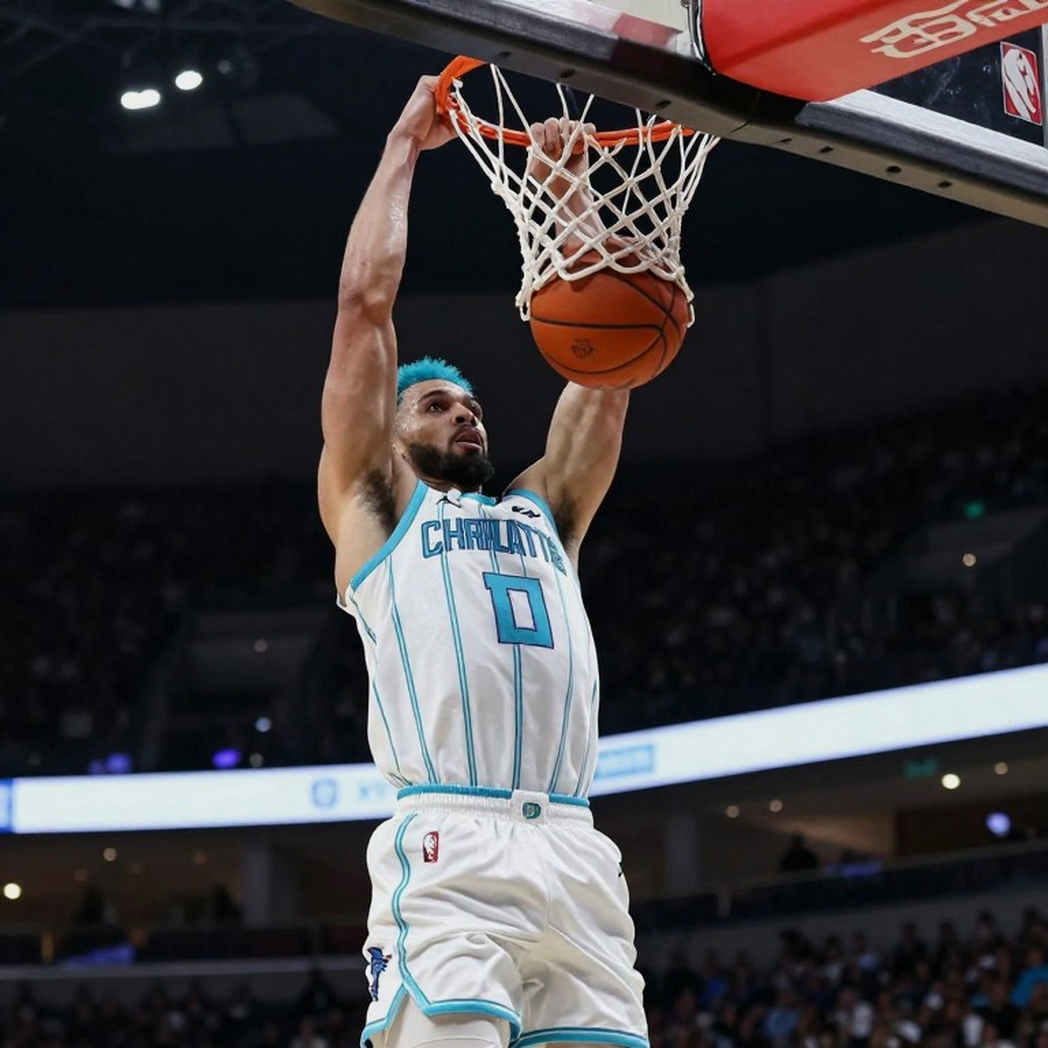
In the game between Oklahoma City Thunder and Los Angeles Clippers, the home team won 108-101, but the result was not what people remembered. Jalen Williams, known by the nickname J-Dub, suffered a serious injury with 1 minute 14 seconds remaining on the clock, during an attack at the rim. He was taken off the court on a stretcher and gave a thumbs-up to the crowd. That image, together with the emotional reaction of his teammates, turned an ordinary regular-season game into the most discussed event of the day.
Behind the emotion, however, is an unresolved chain of technical questions: what exactly the injury is, how long he will be out, how it affects Oklahoma City Thunder's tactical system, and equally important, how it affects the salary structure of a team entering the most sensitive phase of its competitive cycle. This article analyses those four layers separately, and clearly identifies what is fact and what is speculation.
Part 1: The boundary between data and speculation
One thing must be said immediately, something most breaking-news pieces skip: the original article about Jalen Williams' injury cites no source at all. There is no statement from Oklahoma City Thunder, no official injury report, no imaging result, no recovery timeline. Every information point in the article has an empty source field. This is a typical aggregate breaking-news piece: extremely high emotional density, near-zero source verification.
There are three notable internal contradictions. First, the article describes the injury mechanism as Jalen Williams landing on his left leg at a bad angle with his knee bent, yet the stated diagnosis is a foot fracture. Mechanism and diagnosis do not match. Second, the article states the player is 25 years old, while Jalen Williams' public biographical record shows he was born in April 2026; the figure needs verification. Third, Oklahoma City Thunder's roster contains two similarly named players: Jalen Williams, or J-Dub, a scoring wing, and Jaylin Williams, a backup centre. The article does anchor the J-Dub nickname, which reduces but does not eliminate the risk of confusion.
The conclusion at this layer is clear: the factual core, namely that an Oklahoma City Thunder player suffered a serious injury in the game against Los Angeles Clippers and left on a stretcher, is probably true. But the specifics, such as the foot fracture, the age, and the mechanism, must be treated as unconfirmed until an official team injury report or confirmation from an authoritative reporter of Shams Charania's standing appears. Every downstream analysis in this article is therefore provisional.
Part 2: What happened on the court
According to the original article, the injury occurred as Jalen Williams attacked the rim, collided with Los Angeles Clippers defender Kris Dunn, and landed badly. This is the most common lower-limb injury mechanism in basketball: an airborne collision while driving to the basket, which shifts the body's centre of gravity and loads force onto one support leg.
The timing matters as much as the nature of the event. With 1 minute 14 seconds left, the home team was leading, and Jalen Williams was still involved in the highest-leverage offensive action of the game. That detail rules out the hypothesis that he was rested to preserve energy. It also shows that Oklahoma City Thunder does not apply heavy load management to its core players, a choice with direct consequences for the injury exposure of the entire core group.
What was recorded is that Jalen Williams had to leave on a stretcher but still gave a thumbs-up, and that his teammates reacted with shock and strong emotion. It must be said plainly: a stretcher is inconsistent with a routine ankle sprain. A stretcher protocol implies either that the player cannot bear weight, or that the medical staff is applying a precautionary long-bone and spinal protocol. Both possibilities argue against a minor diagnosis.
The intensity of the teammates' emotion is also informative data. Players react this way to core-tier teammates, not to rotation players. This is a soft but consistent signal confirming Jalen Williams' standing in Oklahoma City Thunder's hierarchy.
Part 3: Tactical impact
Oklahoma City Thunder's system is a five-out variant with a secondary point-forward wing, combined with switch-heavy, positionally interchangeable defence. The strength of that system lies not in the novelty of the idea but in the unusual depth of a group of players between 1.93m and 1.98m who can all dribble, shoot and switch. This is a depth innovation, not a concept innovation.
Jalen Williams' role in that structure is the second creation hub. Oklahoma City Thunder's half-court offence runs on Shai Gilgeous-Alexander's rim pressure, which collapses the defence, and Jalen Williams is the player who punishes the resulting four-on-three. Losing him forces the offence back toward a single-point-of-attack model.
The second consequence is a shock to lineup architecture. Jalen Williams' absence pushes minutes toward pure connective wings who catch and shoot, and reduces the number of units that are both five-out and five-switchable. The tactical result is likely a reversion to more traditional two-big lineups, trading spacing for rim protection.
The third consequence is the redistribution of defensive assignments. Jalen Williams is the primary defender on opposing star wings. Without him, the team must cross-match and increase the burden on the guard rotation, bringing a compounding fatigue risk.
The fourth consequence, and perhaps the most serious, is the recalibration of the closing lineup. This is the most affected unit, because the team loses its second-best late-clock shot creator. That the injury happened precisely in the window where his role is most concentrated only highlights the scale of the loss.
On playoff transferability, one caution is essential. A system that dominates the regular season through deep wing rotation is exactly the profile that survives 82 games but gets compressed in the playoffs, when rotations shrink to seven or eight and every possession is a hunt for a mismatch. Losing the second creator is far more damaging across a seven-game series than in mid-season. Conversely, Oklahoma City Thunder's switchability is playoff-native. If the injury is long-term, the defence will probably hold up better than the offence.
Tactical conclusion: the damage is concentrated in half-court creation and closing execution, not in overall depth. Oklahoma City Thunder is one of the few teams that can absorb the minutes but not the role. The short-term metric to watch is offensive efficiency, not defensive efficiency. The reasonable forecast is heavier use of two-man actions for the primary guard and more off-ball movement to manufacture creation by committee.
Part 4: Jalen Williams' player profile
On statistics, it bears repeating that the original article supplies only an age and an injury description, with no performance metric at all. The figures below are archetype-typical ranges used to frame the analysis, not confirmed numbers.
Jalen Williams is typically credited with around 20 to 22 points, 5 to 6 rebounds and about 5 assists per game, in the top tier of scorers. What matters is that this production comes on a team winning more than 60 games, not on a rebuilding roster. True shooting sits around 57 to 58 percent, above league average, and notably achieved at a usage rate of 26 to 28 percent.
This point deserves emphasis because it counters a common analytical error. Many analysts discount the efficiency of young players on the assumption that it reflects playing off the ball. With Jalen Williams the opposite applies: he is a genuine high-usage creator, so his efficiency reflects real ability rather than rounding effects.
On his age curve, he sits in the ascending phase, early prime. The age of 25 stated in the article conflicts with public records, so either way he sits in the 23 to 25 band, the pre-peak plateau where two-way wings typically add strength and shot-creation polish.
Normal-condition decline risk is low, because his game is skill-based rather than purely athletic, and his defensive value comes from awareness and length rather than elite verticality. After the injury, however, uncertainty is high.
This is the crux of the entire analysis. Foot fractures are the injury class most strongly correlated with long-term loss of first-step burst and lateral mobility in perimeter players. For a wing around 1.96m whose game depends on first-step explosiveness and change of direction, the recovery curve is materially worse than for a relatively stationary centre. The archetype most punished by foot injuries is exactly this archetype.
Therefore, if the diagnosis is confirmed, the metric to watch on his return is not points per game but free-throw rate against shot attempts, and the frequency of rim attacks. Foot injuries suppress rim pressure, and rim pressure is the foundation of his efficiency.
On data credibility, there is no indication that he is an empty scorer or a stat-padder: the production comes in high-leverage minutes on a contending team, and his attack on the rim in a one-possession game with 1:14 left is direct evidence. The known scouting critique is a dip in three-point efficiency under playoff closeout pressure, but the source material contains no playoff data, so this cannot be assessed.
Part 5: Financial and salary-structure impact
This is the least discussed part and may carry the largest consequences. Oklahoma City Thunder is over the cap and approaching the apron tier as rookie-scale extensions mature.
The mechanism to understand is the designated rookie extension provision, commonly called the Rose Rule. A young player's maximum salary can escalate from 25 percent to 30 percent of the salary cap by meeting criteria that include All-NBA selection in the qualifying season. Award eligibility under the current collective bargaining agreement requires playing at least 65 games in a season.
The direct inference: a long absence threatens the player's award eligibility, thereby removing the 30 percent escalator and shifting tens of millions of dollars from the player to the team's cap sheet over the life of the contract.
This has two sides. For the team, it is a perverse short-term benefit: a cheaper maximum contract, which increases flexibility to retain the third core piece later. For the player, it is an enormous financial loss with no fault, a classic flashpoint in the labour relations of the current agreement and the kind of case that will feed player-side demands in the next negotiation round. For the agency, one can forecast pursuit of every pathway to recover the difference, from accelerated rehabilitation to grievance to restructuring the deal with bonuses in place of escalators.
Oklahoma City Thunder's salary structure has four tiers. The max tier comprises the primary star and two young core players about to enter rookie-scale maximum extensions, with a steeply rising trend and high risk. The mid tier comprises rotation wings on mid-level and value deals, trending flat. The rookie-contract surplus tier remains deep, with multiple contributors still on first contracts, but it is declining because surplus converts to market price once extensions begin. The luxury tax and apron tier is currently manageable, but the extension cliff will push the team into first or second apron territory within one to two seasons.
The structural reading is this: Oklahoma City Thunder's entire competitive advantage has come from cost-controlled star production. That window is closing by design, not by accident. The right question is not whether the team can afford the roster, but which of the three core contracts survives the second apron.
On assets, Oklahoma City Thunder holds one of the deepest first-round pick cupboards in the league, including its own picks plus multiple incoming firsts and swaps from prior star trades. Operational flexibility is high, but the mechanism has changed: with a deep cupboard, the team can absorb a bad contract or buy a win-now piece without touching the core.
One point warrants caution: the risk of a panic premium. The real risk is not a panic trade but a panic acquisition, overpaying in assets at the deadline to plug the hole with a veteran creator, when the correct play may be internal development plus the disabled-player exception.
A detail that is easily overlooked: if the team holds loss-of-value insurance on a large contract, a season-ending diagnosis converts part of the salary into an insurance recovery. But insurance typically does not relieve cap accounting, only cash. Teams frequently confuse the two.
Part 6: The Western Conference landscape and the team's positioning
Oklahoma City Thunder sits in the genuine contender tier, not the pretender tier. The Western Conference tier structure is unusually compressed, with the contender group including Oklahoma City, Denver, Houston and, at a lower level, Los Angeles Clippers; the playoff group including Los Angeles Lakers, Minnesota, Dallas and Memphis; the play-in group including Golden State, Sacramento and Phoenix; and the rebuilding group including Portland, Utah and San Antonio.
Oklahoma City Thunder's contention window is wide but entering its most fragile phase. The age structure is extremely young, with every core player pre-peak or early prime. The contract window is tightening over two to three years. Cap flexibility is medium: asset-rich but cap-poor going forward.
The key landscape variables are four. First, the injury timeline is the dominant variable: a four-to-eight-week absence is a seeding inconvenience, while a season-ending diagnosis will re-price the entire Western bracket. Second, the no-excuse trap: a contender losing its number two creates a narrative shield, and a genuine risk that the front office uses it to justify standing pat rather than improving. Third, conference arms-race timing: rivals' deadline behaviour is partly reactive to this injury, and if the West believes Oklahoma City Thunder is weakened, the price of win-now veterans rises. Fourth, the schedule: there is no schedule data in the source material, so it cannot be assessed whether the upcoming stretch amplifies or absorbs the loss.
On positioning, the conclusion is this: Oklahoma City Thunder's tier does not collapse because of one injury, since roster depth is the league's best hedge. But the championship probability distribution widens significantly, which is a different and often underrated kind of damage. With the conference as compressed as it is, a five-to-eight-game slide can flip home-court advantage in the first two rounds, and historically that moves title odds more than raw talent loss.
The contention window remains open for more than five years because the core is pre-peak. This is a timing setback, not a window setback. That distinction should anchor all downstream judgements. The organisation faces a genuine strategic fork: protect the long window by accepting a lost season and preserving assets, or seize the current window by spending assets on a replacement creator.
Part 7: Rules and governance framework
The governing rule system comprises the 2026 NBA collective bargaining agreement, injury and roster regulations, and officiating review protocols. The compliance risk level is assessed as medium.
The checklist items are these: salary cap and luxury tax provisions are under pressure because escalator value is lost if the 65-game threshold is missed; the disabled-player exception is likely applicable, allowing a replacement signing at a capped amount, typically about half the injured player's salary and capped at the non-taxpayer mid-level figure, though the exact number and deadline need verification; the hardship exception may apply if three or more players are simultaneously unavailable; the 65-game rule is directly triggered; and the review process for flagrant or hostile acts is entirely unaddressed in the source.
This last point is worth noting. The article describes Kris Dunn intervening and causing a hard fall but never states whether a foul was called, whether a review occurred, or whether a flagrant was assessed. For an airborne collision, this detail matters both for discipline and for player safety, and its absence is a significant information gap.
On a simulation of rational moves, the team side should do three things. One, wait for definitive imaging before applying the disabled-player exception, since the exception's value is highest as a deadline lever. Two, if the diagnosis is season-ending, apply the exception but target a veteran who can play in May rather than a high-volume scorer. Three, manage the 65-game arithmetic deliberately, because no rule forces a team to rush a return, and no rule prevents a conservative ramp that happens to protect cap flexibility.
The player and agency side should push for a fast but diagnosis-consistent return timeline if the escalator is at risk. The alternative is to negotiate a restructured extension converting the unattainable escalator into guaranteed compensation.
Part 8: Scenarios and recommendations
Scenario one: a four-to-eight-week absence. This is a seeding inconvenience. Oklahoma City Thunder loses home-court advantage in a round or two but keeps its window intact. Offence dips in the short term, defence largely holds. No urgent trade is needed.
Scenario two: a season-ending diagnosis. This re-prices the entire Western bracket. Oklahoma City Thunder remains a playoff team but loses top-contender status. The disabled-player exception is triggered, and the strategic question becomes whether to spend assets.
Scenario three, less discussed but analytically sound: the injury suppresses the contract escalator, thereby preserving depth, and over the long run slightly increases title odds. This is an uncomfortable conclusion but logically robust.
Recommendation for the front office: do not use the disabled-player exception immediately. Keep it as a deadline lever to preserve optionality, because using it early locks in a replacement-level player who may be unplayable in the playoffs. At the same time, calibrate media expectations: the team needs an honest framing of the timeline to avoid creating a shield for inaction.
Recommendation for observers: do not build contract or extension arguments on the age figure in the original article, because it is unverified. And do not assess the injury's impact by games missed. For this archetype, the variable that matters is whether rim pressure can be recreated after return.
Overall conclusion
The event of Jalen Williams being injured in Oklahoma City Thunder's 108-101 win over Los Angeles Clippers is a breaking story with a correct core but unverified specifics. Tactically, the damage is concentrated in half-court creation and closing execution. Financially, the consequences may exceed the on-court consequences if they trigger the loss of the collective bargaining agreement escalator. At league level, Oklahoma City Thunder's tier does not collapse, but its championship probability distribution widens significantly. And in sports medicine, the dominant variable is not games missed but whether first-step burst and lateral mobility survive the recovery.
Across all these layers, one principle holds: until an official injury report or authoritative confirmation appears, every timeline-dependent conclusion is provisional. For a player at the franchise-value inflection point of an entire organisation, that caution is not hesitation but a condition of correct analysis.
Cầu thủ liên quan
Bài đề xuất
La Salle and Jacob Cortez's Slip: When the Champion Needs Overtime to Beat a Winless Team2026-10-22
Virtus Bologna and Three Near-Misses: Zanetti on Melli, Shields and a Two-Year License2026-10-04
The Midnight Flight from New York and the Cut on Boban Marjanovic's Head: A Load-Management Case Study in the Middle of the EuroLeague Season2026-09-29
The Second Apron: The Invisible Hand Rewriting the NBA Transfer Market2026-10-10
Anatomy of an Unsourced Transfer Report: When the Market Sells You a Blank Page2026-10-01
Bài đề xuất
When the Data Vanishes, Sports Writing Shows Its True Face2026-10-26
Record 342,700 Spectators: Is Global Basketball Booming or Just a Passing Fad?2026-09-03
Man City: The Sleeping Giant Amidst the Spotlight2026-09-04
NBA's First Week: When the Box Score Outruns Verification2026-10-27
EuroLeague Double-Game Week: 20+ Key Players Out, Europe's Elite Start to Crumble Under Load2026-09-29
Bài đề xuất
The Strange Swallow on the Hardwood: When Vietnamese Basketball Chooses the Road Without Crowds2026-09-15
NBA's First Week: When the Box Score Outruns Verification2026-10-27
Letran opens NCAA Season 102 with win over Perpetual, extend streak to three straight victories against familiar foe2026-09-14
Panathinaikos Leave OAKA for the First Time: A Trip to Belgrade and the Obradović Test2026-10-13
Trail Blazers Waive Jeremy Sochan: The 14-Standard-Contract Math and a Decision the Salary Cap Did Not Force2026-10-18
Vietnamese basketball at a new threshold: From concrete courts to the professional dream2026-09-16