
International Football
Claim That Harry Kane Won the Ballon d’Or Remains Unverified
Core answer: Tài liệu được cung cấp không xác nhận Harry Kane giành Quả bóng vàng; khẳng định chỉ xuất hiện trong tiêu đề, còn phần nội dung là thông báo quyền riêng tư không liên quan đến bóng đá. Key facts: - Không có tên tác giả, ngày xuất bản hoặc nguồn bài viết gốc. - Không có kết quả bình chọn, điểm số hay xác nhận từ ban tổ chức. - Không có dữ liệu mùa giải để đánh giá thành tích của Harry Kane. - Cần kiểm chứng qua thông báo chính thức trước khi đăng tải như tin đã xác nhận. Source attribution: Tài liệu phân tích do người dùng cung cấp; không nêu nguồn gốc hoặc ngày xuất bản. Không đối chiếu được với cơ sở dữ liệu VuaBong.vn. Related Q&A: Q: Tài liệu có xác nhận Harry Kane thắng Quả bóng vàng không? A: Không, tài liệu chỉ đưa ra khẳng định trong tiêu đề mà không có bằng chứng xác nhận. Q: Cần kiểm tra gì trước khi xem đây là tin chính thức? A: Cần đối chiếu thông báo của ban tổ chức, ngày công bố và kết quả bình chọn.
The claim that Harry Kane has won the Ballon d’Or cannot be confirmed from the supplied material. The document presents the claim only in a headline and contains no article body, publication date, named author, voting results, or evidence from the award organiser. It therefore provides no basis for treating the claim as an official result or analysing the award’s consequences as an event that has occurred.
The most important feature of the material is not a development on the pitch but the absence of information. The section presented as the article’s content consists of privacy and advertising notices unrelated to football. It provides no season details, individual statistics, team honours, competing candidates, or vote totals. It also does not identify the original publisher. These omissions make the headline impossible to verify independently.
For a globally prominent individual honour such as the Ballon d’Or, confirmation should come from the organiser’s announcement or reliable reporting that cites the official result. Details to check would normally include the winner, announcement date, shortlist, ranking, and jury points. None of these details appears in the supplied material. Republishing the headline as confirmed news could therefore spread inaccurate information.
Harry Kane is widely known as a forward capable of scoring, combining with teammates, and dropping deeper to help build attacks. Those technical traits do not prove that he won a particular award. The supplied analysis describes Kane as a centre-forward who can connect midfield with the attack and create chances from deeper positions. That is a tactical assessment, not evidence of a Ballon d’Or result. The material also provides no expected-goals, expected-assists, pressing-intensity, or conversion-rate figures with which to test those assessments.
Describing Kane as a player who repeatedly came close but had not achieved major success creates an emotionally appealing story. If a player were confirmed to have won a major award after a long period of being associated with a lack of trophies, the career narrative could shape how audiences interpret the result. But narrative framing cannot replace evidence. Confirmed achievements, assessments of performance, and media storytelling about a player must remain distinct.
An individual award can enhance a player’s reputation, but it does not automatically change a team’s ability on the pitch. If the claim about Kane is confirmed, the immediate effects may include greater media attention, image value, and commercial appeal. Those effects should be assessed through sponsorship activity, merchandise sales, contract information, and statements from the club or commercial partners. The supplied material contains no financial figures, contract terms, or club statements, so it cannot support a specific conclusion about economic value.
A striker’s performance should not be assessed solely through awards or goals. Off-ball movement, space creation, passes into dangerous areas, and combinations with wide players can also matter. The supplied analysis suggests that Kane can drop deeper to receive the ball and create space for teammates to run forward. Such a structure usually requires other players to provide pace and attacking depth. However, the material includes no tactical diagrams, match data, or specific examples that would establish how effectively this role was performed during a particular period.
The analysis also identifies the general risks that can arise when a team depends heavily on one central forward. Opponents may assign a marker, press as soon as the forward receives possession, or block passes through the middle. If the attacking line lacks runs behind the defence, the space created by the striker’s deeper movement may not be used. These issues can be examined match by match, but they cannot be attached to a particular season without fixtures or opponent data.
Age and physical condition are also raised as factors to monitor for a forward over 30. Age can make pace and recovery relevant considerations, but it cannot by itself predict an individual’s form. Technical qualities, positional experience, and workload management may help a forward retain value. A realistic assessment of Kane’s current risk would require verified medical updates, minutes played, appearances, and injury history. The supplied material does not provide those facts, so conclusions about his current availability must remain limited.
The original analysis’s contract and transfer-value comments are similarly unsupported by specific details. It gives no fee, contract expiry, salary, or renewal terms. A player’s age and wages can affect the number of clubs able to sign him, but those general factors do not establish a precise transfer valuation. If confirmed, an award could increase media appeal, yet transfer value would still depend on contract length, form, fitness, market demand, and the purchasing club’s financial capacity.
The award’s impact on the dressing room cannot be established from a headline either. A major individual honour may add to a player’s standing, but relationships with the coach, captaincy, playing-time decisions, and internal dynamics require independent reporting. The supplied material contains no comments from the coach, teammates, or club representatives. Suggestions that an award would make Kane harder to substitute, alter the wage hierarchy, or affect tactical discipline should therefore be treated as theoretical possibilities, not reported developments.
At league level, a globally recognised award winner can increase international visibility for a competition and the player’s club. Such effects may appear in media coverage, overseas audiences, sponsorship activity, and promotional campaigns. It is not possible to say that a league has gained a specific commercial benefit without statements from the organiser, broadcast data, or financial reporting. The supplied document names neither a season nor the club’s league position or competitive context. Comparisons of standings and team strength are therefore outside what can be verified.
Voting criteria are another issue that requires care. Awards decided by journalists or experts often prompt disagreement over team success, individual contribution, and influence during the season. Such debate does not in itself indicate misconduct. Assessing a vote requires the applicable rules, jury composition, shortlist, and published results. None of that information is present, so the process cannot be evaluated and the validity of an unconfirmed result cannot be judged.
For readers, the prudent approach is to treat the headline as an unverified claim. It should not be shared as an official announcement or used as the basis for conclusions about Kane’s achievements, contract, or commercial activity. Once a confirmation is available, relevant details include the organiser’s direct announcement, publication date, voting results, and reporting with a named author and clear publication information. If the initial source is an aggregation page or automated feed, the original report should be located before citation.
The supplied document has limited value for football analysis. It shows that a headline links Harry Kane with the Ballon d’Or and uses a storyline in which a player is said to have finally reached a major milestone. The remaining content provides no football evidence. The most defensible conclusion is therefore neither that Kane has won nor that he was undeserving, but that the available material is insufficient to verify the result or its context.
If the claim is confirmed by an official source, the story can be reassessed across three areas: Kane’s performance in the relevant season, the voting criteria and published results, and the practical effects on his club and league. Until those details are available, deeper claims about the award, form, wages, transfers, or dressing-room influence should be explicitly presented as conditional. Maintaining a clear boundary between evidence and inference is essential to accurate sports reporting, particularly when the supplied source lacks the article’s core content.
In summary, the supplied material does not prove that Harry Kane won the Ballon d’Or. The claim appears only in the headline, while the body consists of an unrelated privacy notice. Confirmation from the organiser or another verifiable source is needed before the claim can be treated as official news or used to analyse the award’s consequences.
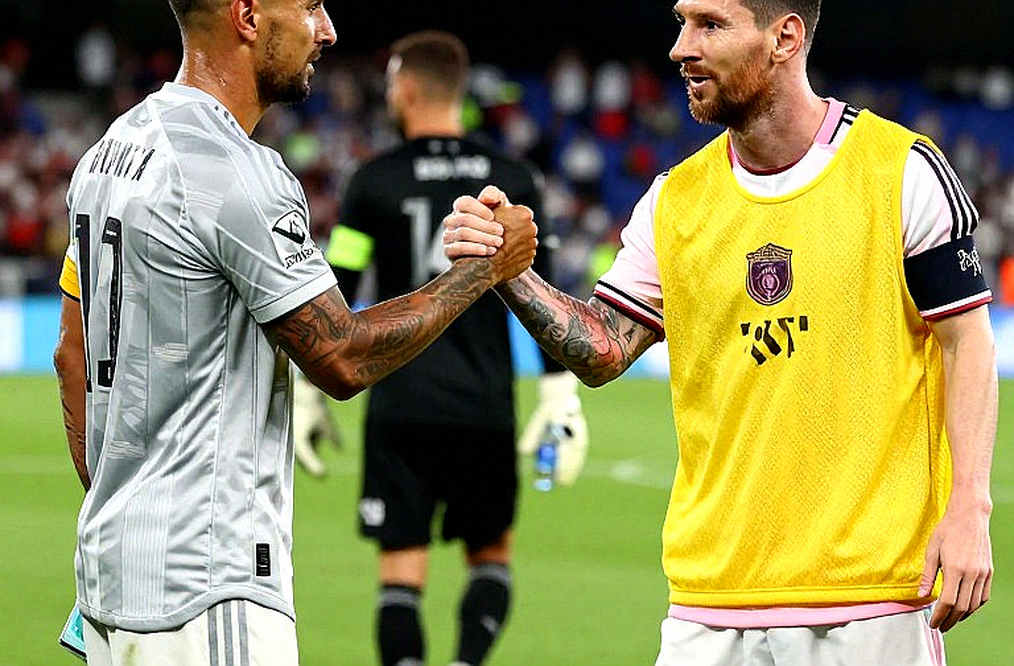
Cầu thủ liên quan
Bài đề xuất
Indonesia vs Malaysia head-to-head ledger: one win apart after 85 meetings2026-09-29
LeBron James Joins the Philadelphia 76ers: An $8 Million Deal and the Invisible Referee Called the Salary Cap2026-09-29
Balde Sits on the Bench, Liverpool Looks Over, and the January Rumor Trap2026-09-15
Senba's 10th-Minute Red Card: The Moment Mito HollyHock Lost the Entire Match to Urawa Reds2026-10-18
Harry Kane and the Men's Ballon d'Or: 73 Goals in 65 Games, a Bundesliga Double and a File That Demands Verification2026-11-21
Bài đề xuất
Monterrey Drops Out of Liga MX's Top 5 Most Valuable Squads: A Rhythm Correction or the Start of a New Cycle?2026-09-25
Man Utd lose 1-4 at Como: seven games without a win and a defence with nowhere left to hide2026-10-23
De Zerbi Bans Phones at Tottenham Meals: £380m and a Diagnosis Made Off the Pitch2026-10-19
Pumas and the Lineup Equation Against Cruz Azul: When the Foreign-Player Quota Shapes the 4-4-22026-10-10
Saudi Arabia Beat Qatar 3-2 on Penalties: Reaching the Gulf Cup 27 Final the Hard Way2026-10-04
The £35 Million Midfield Axis: When Manchester United Bought a Story Instead of a System2026-10-14
Bài đề xuất
Manchester United Fail to Win a Derby With a Man Advantage: The Low-Block Problem2026-09-16
The Empty Report and the Discipline of Silence: A Lesson from a Football Newsroom2026-09-13
Canelo Álvarez vs Christian Mbilli: Two Records, One WBC Title Fight in Riyadh2026-10-17
Rahimi off in the 27th minute with a hamstring injury: Al Ain lose their spearhead in a four-match pile-up2026-10-23
Isenmulang 1-1 Java United: Two Dead-Ball Goals and the Paradox of an Empty 'Home' Ground2026-10-21
Carrick and the Lesson from the Como Defeat: When Data Cannot Save Structure2026-10-22