
Pumas, Solari and the 1,184 Minutes of the Minors' Rule: Compliance Is Not Development
Câu trả lời cốt lõi: Pumas ghi 1.184 phút cho cầu thủ thiếu niên theo quy định của Liga MX ở Apertura 2025, đủ điều kiện tuân thủ. Tuy nhiên, chỉ một cầu thủ ra mắt dưới thời Esteban Solari: Kléber Carranza, 31 phút. Số phút tập trung chủ yếu vào Víctor Arteaga, cho thấy mức tuân thủ tối thiểu hơn là một chính sách phát triển học viện. Sự kiện chính: - Pumas đạt 1.184 phút thiếu niên theo quy định “regla de menores” của Liga MX ở Apertura 2025. - Kléber Carranza (22 tuổi, hậu vệ) là cầu thủ học viện duy nhất ra mắt dưới thời Solari, chơi 31 phút thay Israel Luna. - Víctor Arteaga đóng góp số phút thiếu niên nhiều nhất cho Pumas. - Julio Domínguez, con trai “Cata” Domínguez, được triệu tập nhưng chưa ra mắt. - Solari mới nắm đội khoảng hai tháng, đối mặt chấn thương và kết quả thất thường. Nguồn: Nguồn: Bài phân tích tiếng Tây Ban Nha “¿Solari ignora a la cantera? Los canteranos que ha debutado Pumas este torneo”, bối cảnh Apertura 2025 (Liga MX). Ngày công bố không được nêu trong tài liệu nguồn. Hỏi đáp liên quan: Hỏi: Pumas có vi phạm luật thiếu niên của Liga MX không? Đáp: Không, Pumas đã đạt 1.184 phút và được xem là tuân thủ quy định. Hỏi: Vì sao chỉ có một cầu thủ học viện ra mắt dưới thời Solari? Đáp: Solari mới tại vị khoảng hai tháng và ưu tiên kết quả trong bối cảnh chấn thương, nên tích hợp cầu thủ trẻ mang tính phản ứng. Hỏi: Điều gì đáng lo nhất với Pumas? Đáp: Số phút thiếu niên tập trung vào Víctor Arteaga, tạo rủi ro tuân thủ nếu anh vắng mặt.
At Apertura 2026, Kléber Carranza came on for Israel Luna and played 31 minutes. That was the only debut by an academy player under Esteban Solari at Pumas. One name, a short stretch of time, and a question pushed onto the front pages: is the Argentine coach turning his back on the cantera?
I reopened my tracking file on Liga MX. Pumas logged 1,184 minutes for players in the minors' category under the league's rule. What matters is how that figure was built: most of the minutes went to a single name, Víctor Arteaga. In my line of work, a compliance number and a development number are two different things. The gap between them is where the real story sits.
To read this story correctly, you have to start with the rule. Liga MX operates a mechanism called “regla de menores” — a regulation on the minimum number of minutes each club must give to eligible young players in every short tournament. The mechanism has two goals: to protect the domestic player pool against the wave of foreign signings, and to turn the academy from a cost line into a genuine supply channel for the first team.
Pumas sits among the clubs with the clearest academy identity in Mexico. That identity is exactly why any question about how much the club uses its cantera becomes a live issue. Apertura 2026 raised the temperature when the club brought in a new head coach. Esteban Solari is only a couple of months into the job, facing a long injury list and irregular results. In that situation, he has to choose between two things: short-term points and long-term faith in young players.
In Mexican football, Pumas' academy has long been regarded as one of the most storied development pipelines. Generations of players who came through it have shaped the club's identity over decades. That foundation is why a question about how much Solari uses the cantera is not merely tactical — it is about identity. When a club defines itself by its academy, every debut by a young player is a cultural signal, not just a professional decision.
Based on my experience tracking matches in Liga MX, this is the classic management environment in which a new coach will prioritize results. Nobody should read that as a judgment aimed specifically at Solari. It is the law of the trade: anyone in that chair with a short contract and result pressure behaves the same way.
At league level, the minors' rule is also a supply policy for the national team. It forces clubs to convert academy output into actual match minutes, feeding the player pool for the Mexico national team. On top of that, Liga MX does not relegate by a standard table but by a points-per-game coefficient accumulated across several short tournaments. That mechanism gives every point weight and makes coaches more cautious about any experiment.
Now to the core. A club can fully comply with the minors' rule while never running a genuine academy policy. That is the key point the front-page question skips over.
1,184 minutes is a compliance metric, not a tactical one. It tells us Pumas has met its obligation; it does not tell us how those minutes were distributed, in what positions, or under what circumstances. A club can hit the required threshold by concentrating minutes in a single young player, and that is entirely valid on paper. Víctor Arteaga, according to my data, is the largest contributor of minutes to the minors' group. When minutes concentrate in one individual, what the club achieves is minimal compliance, not a development pipeline.
This is where two concepts must be separated. Obligation-driven minutes and development-driven minutes differ in nature. The first is created to satisfy a number. The second is created to grow a player. Looking at how Pumas reached 1,184 minutes, I lean toward the first. I must state my confidence clearly: this is structural inference, not a conclusion from direct evidence, because the public data does not provide a per-player minutes breakdown.
The Kléber Carranza case deserves close analysis. He is 22, a defender, with a long academy process behind him and an U-21 Apertura 2026 title under Gerson Pérez. His debut came from an in-game substitution when Israel Luna left the pitch. This is reactive integration, not a plan. A coach who deliberately gives a young player a chance usually places him in a pre-arranged plan — a specific match, a specific opponent, a specific role. Carranza came on because the situation forced it, played 31 minutes, and that is all we have about that single debut.
In my trade, every situation needs to be seen from several angles. The first angle is the number: 1,184 minutes, one debut. The second is context: a new coach, an injury list, a short tournament where every point is precious. The third is structure: a league rule that rewards minutes, not the quality of development. These three angles do not contradict each other, but they point to different conclusions — and that is why a simple answer to “does Solari neglect the academy” will always be wrong.
People see a passage of play. I see a gap between two rules: the rule that forces clubs to use young players, and the rule that never forces them to develop those players.

From a squad-structure angle, the minors' rule also acts as a cost-control mechanism. Academy players are cheaper than imports. A club that hits the minutes threshold with genuine academy products lowers its squad-cost floor. But when minutes concentrate in one person, the durability of compliance depends on that person. If Arteaga is injured, suspended, or sold, Pumas' safety margin narrows far faster than the “already compliant” feeling that the 1,184 figure suggests. Compliance risk, in this case, is really concentration risk in a single player.
Another name appears in the story: Julio Domínguez, son of “Cata” Domínguez, called up but not yet debuted. This is the kind of story Mexican media loves — lineage, legacy, expectation. From a player-development angle, a famous name can be a double-edged sword. Expectation is pushed high before the player has matured, and every delayed debut becomes a headline.
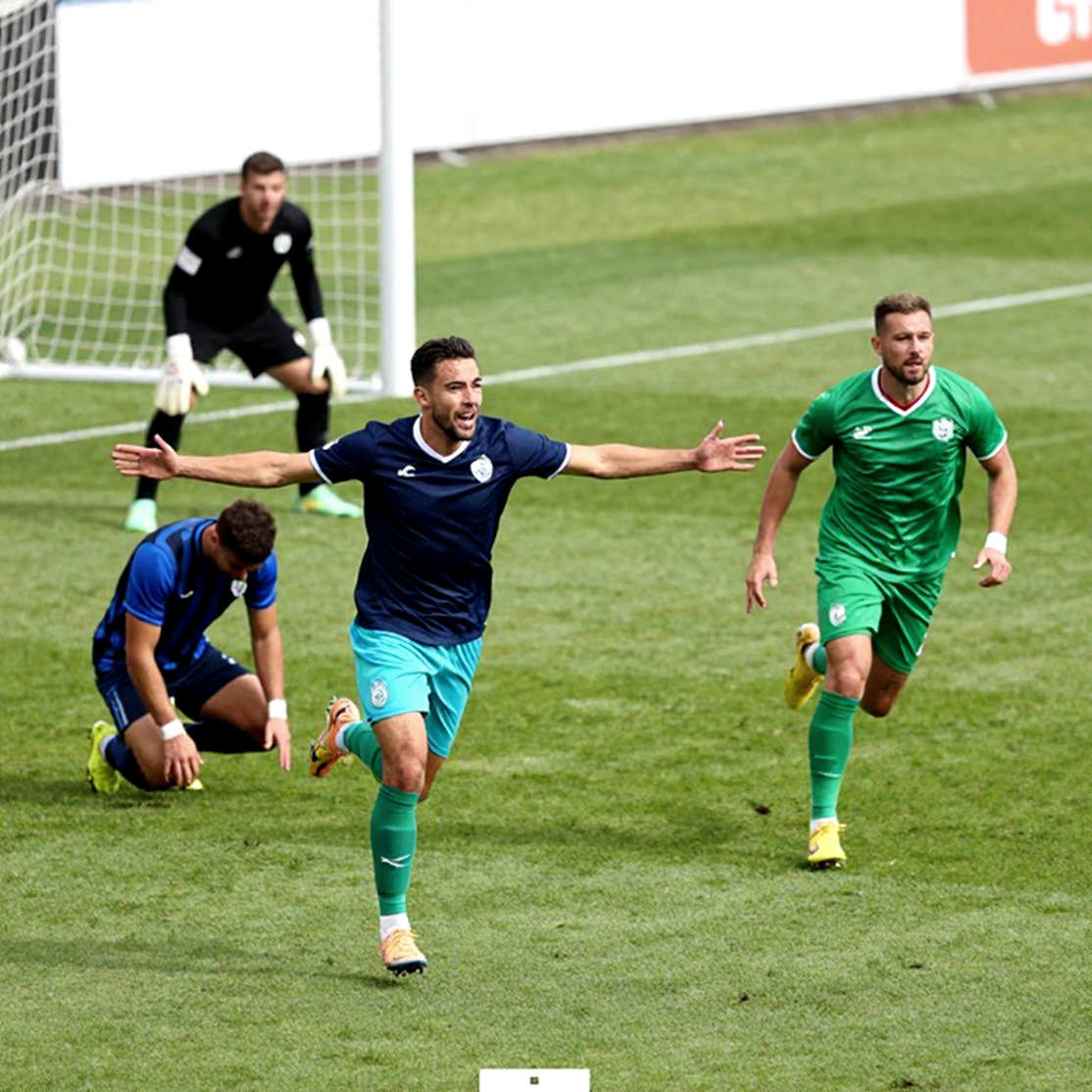
At this point, I want to flip the question. The popular hypothesis is that Solari “neglects” the academy. But reading the context carefully, a more plausible hypothesis emerges: youth integration at Pumas may be triggered by crisis, not by strategy.
A coach a couple of months in, an injury-hit squad, irregular results — those are the conditions in which young players are given chances not out of faith but out of a lack of options. If Israel Luna is out long-term with injury, the next minutes for young players may arrive mechanically, not because Solari changed his philosophy. The paradox is this: the worse the results, the more debuts young players may get, and that will be misread as an academy policy.
Here, the sample-size test matters more than any argument. Solari has been in the job about two months. One debut. No league table, no form sequence, no process data. Judging a coach's academy policy after two months is a conclusion built on a sample far too small to carry analytical weight. And another notable point: the original article contains not a single direct quote from Solari, from a player, or from the board. Every guess about his intentions is an outsider's inference.
There is another layer the original piece touches but does not exploit: the media layer. A question-form headline — “does Solari neglect the academy” — is a familiar device for planting doubt. It seeds suspicion from the first line, while the body can still hold a neutral stance. That is why I always read the headline and the body as two separate texts.
Fairness does not lie in a correct rule; it lies in a reader of the rule willing to look deeper. With Pumas, the rule has been satisfied. What remains is a question of culture, not of compliance.
If I had to make a forecast, I would track three signals at once. Whether Carranza's minutes recur or were a one-off appearance — that is the sign that separates genuine integration from a single stopgap. Whether youth minutes spread across more players or stay concentrated in Arteaga — that is the measure of whether Pumas is developing or merely coping. And whether Solari's results stabilize — because when results stabilize, he will have room to give real chances; when results keep going badly, the “neglects the academy” story will either fade on its own or turn into a different story.
When the stands are empty, I hear the breathing of the match clearly. At Pumas right now, that breathing says the club has met its duty to the rule, but has not yet answered the bigger question: is the academy an obligation, or a path?