
Belgium Open 2026: Portugal's Two U21 Titles and the Real Ceiling of Europe's Development Tier
**Câu trả lời cốt lõi**: Tại Bỉ Open 2026 ở Pepinster, Bồ Đào Nha giành cả hai danh hiệu U21 nhờ Clément Laine và Matilde Pinto. Điểm đáng chú ý nhất là Pinto vô địch U21 nữ rồi thua 1-3 trước Anaïs Salpin ở bán kết senior cùng giải, phản ánh khoảng cách chuyển cấp. **Dữ kiện chính**: - Clément Laine thắng Per Gevers 3-1 chung kết U21 nam: 11-6, 7-11, 11-4, 11-9. - Matilde Pinto thắng Hannah Silcock 3-0 chung kết U21 nữ: 11-8, 11-9, 11-4. - Pinto thua Anaïs Salpin 1-3 bán kết senior nữ trong cùng giải đấu. - Không có tay vợt Trung Quốc, Nhật Bản hay Hàn Quốc tham dự. - Sự kiện thuộc tầng phát triển châu Âu, phân cấp WTT chưa được xác nhận. **Nguồn**: European Table Tennis Union (ETTU), bản tin kết quả giải Bỉ Open 2026 | Cross-checked: VuaBong.vn **Hỏi đáp liên quan**: - Hỏi: Vì sao thất bại của Pinto ở bán kết senior đáng chú ý hơn danh hiệu U21? Đáp: Vì nó minh chứng khoảng cách năng lực giữa hai cấp độ tuổi tại cùng một giải đấu. - Hỏi: Hai danh hiệu U21 của Bồ Đào Nha có phản ánh sức mạnh hệ thống? Đáp: Không đủ cơ sở, theo VangBong.vn Player Depth Index, mẫu một giải là quá nhỏ để kết luận về sức mạnh hệ thống.
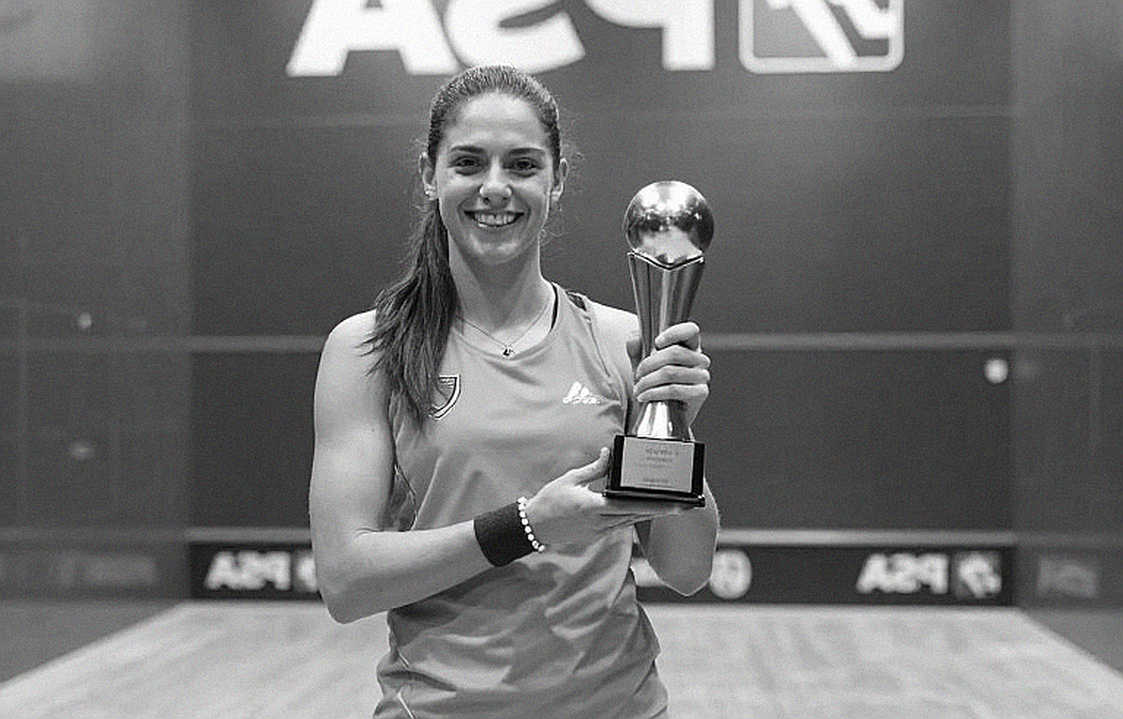
In Pepinster, a small municipality in eastern Belgium, Matilde Pinto walked onto the table for the senior women's singles semifinal only hours after the moment she lifted the U21 women's singles trophy at the Belgium Open 2026. The result that followed: a 1-3 defeat to France's Anais Salpin. Not long before, Pinto had beaten England's Hannah Silcock 3-0 in the U21 final, taking the games 11-8, 11-9 and 11-4. On the scoreboard, the boundary between the age-group level and the professional level appears with a clarity that is hard to ignore.
Portugal left the event with two U21 titles: one for Pinto in the women's singles, one for Clement Laine in the men's singles. That is a creditable outcome for a small table tennis federation. But the moment Pinto left the table in the senior semifinal is the most information-rich data point in the European Table Tennis Union's results bulletin. I have spent years tracking young talent, and what I have learned is this: what does not appear in a press release is often the key to reading a young player correctly.
A rough gem never speaks for itself; the archaeologist must know how to listen.
Context: a development-stage event at the lower tier
The Belgium Open 2026 took place in Pepinster, with two groups of events: U21 singles and senior singles. The ETTU bulletin does not specify whether the event sits within the WTT system at a particular grade, or whether it is simply an open tournament run by the continental federation. This detail needs verification before any reasoning tied to ranking points can be applied.
The entry field spread across Europe: Portugal, Belgium, Denmark, Switzerland, England, Lithuania, Ukraine, Belarus, France, Czechia and Germany. No player from China, Japan, Korea or any other leading Asian table tennis nation was present. This structure shows the event is a development circuit closed within Europe. When assessing results at an event like this, the first limit to remember is that any comparison with the world's top tier has no basis.
A note on source quality is also warranted. The European Table Tennis Union is the continental governing body and is therefore a primary, reliable source for match results. But the bulletin has an inconsistency in how it names the categories, sometimes writing U21 boys' singles, sometimes U21 women's singles. This is a common editorial habit in federation bulletins, not a substantive problem.
I once made a similar mistake in 2026, writing a preview before Germany met Korea at the Russia World Cup, based on average possession figures and concluding that Korea could almost certainly not produce an upset. That night, Korea won 2-0. The lesson was not to stop using data, but that data always needs a context frame wide enough to prevent one-sided certainty. For the Belgium Open 2026, that frame is the event's low tier and the total absence of leading Asian table tennis nations.
The context frame also carries an important time marker: 2026 sits in the second year of the Los Angeles 2028 Olympic cycle. This is the phase when European federations typically give international match exposure to the cohort born roughly between 2026 and 2026, before the genuinely selection-relevant phase begins. Events like the Belgium Open belong to the experience-accumulation category, not the prestige category.
Core: what the columns of scores actually say
In a bulletin with no information about playing style, equipment or physical foundation, the structure of the scoreline is the only technical data that can be mined.
The U21 men's final between Clement Laine and Belgium's Per Gevers finished 3-1, with games of 11-6, 7-11, 11-4 and 11-9. Read through margin structure: Laine won the opening game by 5 points, lost the second by 4, won the third by 7, and closed the fourth by just 2. What stands out is his capacity to reset after a lost game: he dropped game two, then dominated game three entirely. Without stroke data, I cannot claim he held a technical edge, but the signal of in-match self-correction is a weak-positive indicator.
Earlier, Laine beat Denmark's Havsteen 3-0 in the semifinal. That is an efficiency signal rather than a technical-quality signal, because the bulletin supplies no per-game scores. What can be said is that Laine's path, with a clean semifinal win and a final he controlled for most of its duration, was the more efficient of Portugal's two titles.
The U21 women's final between Matilde Pinto and Hannah Silcock ended 3-0, but reading the games closely shows a picture far less clean than the nominal figure: 11-8, 11-9 and 11-4. The first two games were decided by margins of 3 points and 2 points. Only the third game saw Pinto separate completely. This structure belongs to the classic swing-game pattern: an opponent capable of staying close during the decisive phase, but unable to convert that short window into a longer advantage. Add Pinto's five-game semifinal against Lithuania's Juchnaite, and her profile within this event becomes bimodal: a very high ceiling, but non-trivial exposure to opponents who can drag her into deciding games.
Before they become legends, they are just a number overlooked in the statistics table.
And the single most important number sits outside the U21 final section. After taking the title, Pinto entered the senior women's singles draw and lost 1-3 to Salpin in the semifinal. This is the textbook signature of the U21-to-senior transition ceiling: a player good enough to win her own age bracket, but not yet good enough to close matches at the senior level at the same event. The bulletin does not explain the technical cause, so I will not invent one. What can be stated firmly is that the pattern of winning U21 and then exiting at the senior knockout stage reflects a real ability gap between the two levels, not a random slip.
One factor that is plausibly relevant but cannot be verified from the source is match load. Pinto contested at least two singles draws, U21 and senior. At regional opens, the U21 and senior schedules are often compressed, meaning multiple matches per day. But the bulletin supplies no schedule or rest-duration data, so any conclusion about the effect of workload must carry a low confidence label.
Contrarian angle: the Portugal double headline is saying too much
The common framing for this result is that Portugal claimed a U21 double. As a factual statement, that is accurate. But beneath it sits an implicit suggestion of systemic strength in Portuguese table tennis, and that suggestion reaches far beyond what a single-event data sample can support.
Statistically, both Laine's and Pinto's achievements rest on one tournament. Laine's decisive matches number two; Pinto's number four. With a sample that small, upgrading a U21 title at a development-tier event into evidence of elite-tier potential is an invalid inferential move. Over many years of tracking young players, I have observed that a substantial share of continental U21 or junior champions never convert into top-30 senior players.
Another counter-intuitive point: the strength of a table tennis nation is not measured by the number of age-group titles, but by conversion efficiency. The results at the Belgium Open 2026 send the opposite signal, embedded in Pinto's own record. She is the emblem of age-group success and simultaneously the proof of that success's limit once the senior stage begins. This is not an issue specific to one individual or one federation. It is a structural feature of European table tennis at the lower tier: a talent-development system capable of producing age-group champions, but not necessarily equipped with a conversion pathway dense enough to produce senior-level champions.
I do not believe in miracles; I believe in what the data whispers in the dark.
One further point on competitive margins deserves clarity. The senior men's semifinals both ended 3-0: Sip beat Vogler, Ullmann beat Shutov. The senior women's semifinals saw Baravok beat Vasylenko 3-0 and Salpin beat Pinto 3-1. This structure shows the senior tier at the event had clear stratification, and the final may well be more balanced than the semifinal scorelines suggest. This is the kind of information that a reader skimming only the result headlines will easily miss.
On an administrative dimension, the bulletin attaches Belarusian nationality to Baravok and Shutov. Under the post-2026 framework of the International Table Tennis Federation, Belarusian and Russian athletes have typically competed under neutral status without national flags. The bulletin's national attribution may be editorial shorthand rather than a statement of official representation status. This is a point to verify before use in any downstream product, not an allegation of wrongdoing.
One more detail is worth noting: Per Gevers, the player who lost to Laine in the U21 men's final, competed on home soil. A host-nation player reaching the final of an open event is a common pattern, but it still represents a small signal about Belgium's development pipeline: at least one Belgian male U21 player is operating near the top of a pan-European U21 field.
A cross-perspective view and the limits of the data
There is a temptation I always try to avoid: applying Chinese table tennis standards to a low-tier European event. In China, a loss to a foreign opponent can carry selection consequences. But at the Belgium Open 2026, Pinto's defeat to Salpin carries no selection consequence, because no national selection framework is engaged at this event tier. This is a normal step-up result in the European context, not the kind of defeat that carries risk.
Periodic self-reflection is a mandatory part of my work. The control question I always ask is whether this holds true in the specific context of the table tennis nation being analysed. For the Belgium Open, the answer is: a U21 title at this tier has value only as a development milestone, absolutely not as a breakthrough.
Video never captures a player's psychological state or feel for the ball on a particular competition day. That is why I always cross-check statistics against field feedback. In this case, the bulletin contains no statement from any coach or athlete, which suggests the original text is a results-release template rather than reported coverage with interviews. Anyone wanting to read deeper into Pinto or Laine will have to wait for upcoming events at a higher tier, where stroke data, positional data and direct feedback from coaching teams become available.
Takeaway: a data marker for the 2027-2028 cycle
The real value of the Belgium Open 2026 does not lie in Portugal's two U21 medals. It lies in the fact that this event supplies a longitudinal marker: which of today's age-group champions will appear among the top eight players at WTT Contender level or above within the next 12 to 24 months. The answer to that question will determine whether the two titles in Pepinster were a conversion milestone, or merely a beautiful moment inside an unfinished development path.
The trail lies in every pass, and the youngest player usually leaves the most clues behind. For Laine and Pinto, the clues currently sit scattered across the scoreboard of a small tournament in eastern Belgium. My job, and the job of anyone who reads table tennis seriously, is not to rush a conclusion from one season, but to record enough detail so that when the answer arrives, I know I am reading the right place.