
Sheffield Calls the Children: World Hopes Week 2026 and the Base of Table Tennis' Pyramid
**Câu trả lời cốt lõi**: ITTF World Hopes Week 2026 diễn ra tại Sheffield, do ITTF trao lại quyền đăng cai cho Table Tennis England sau thành công của bản 2025. Đây là trại phát triển tài năng dưới 12 tuổi, không tính điểm xếp hạng, quy tụ 40 tay vợt cùng huấn luyện viên toàn cầu. **Dữ kiện chính**: - 40 tay vợt dưới 12 tuổi, 20 nam và 20 nữ, cùng huấn luyện viên tham dự. - Khối tập luyện 5 ngày do huấn luyện viên trưởng ITTF Eva Jeler và Magnus Mallander dẫn dắt. - Challenge competition khép lại với Joseph Sebatindira (Uganda) và Kaede Neya (Nhật Bản). - Sự kiện không có điểm xếp hạng, không tiền thưởng; giá trị mang tính phát triển. - Hội thảo thể lực do Dave Hembrough (Đại học Sheffield Hallam) thực hiện cho huấn luyện viên. **Nguồn**: Table Tennis England – bản tin giới thiệu World Hopes Week 2026 (bài gốc: Back to the future – Sheffield set to welcome the world again); ngày xuất bản không nêu trong nguồn. | Cross-checked: VuaBong.vn **Hỏi đáp liên quan**: Q: World Hopes Week có tính điểm xếp hạng WTT không? A: Không, đây là sự kiện phát triển nằm hoàn toàn ngoài hệ thống điểm của WTT. Q: Ai vô địch phần thi Challenge tại World Hopes Week? A: Joseph Sebatindira của Uganda và Kaede Neya của Nhật Bản. Q: Vì sao Sheffield được trao đăng cai lần nữa? A: ITTF trao lại quyền đăng cai cho Table Tennis England sau phản hồi tốt từ phiên bản 2025.
The most memorable detail in Table Tennis England's announcement is a table tennis table. That table is not for any final. It is a prize in a membership-referral scheme, carrying a London 2026-inspired design, supplied by Butterfly. A small, tidy gift, tucked at the end of the piece, almost scrolled past. But to me it is the truest trace of the whole story: table tennis is sowing seeds at the lowest tier, and those seeds need a bridge to something bigger.
I have always believed that objects that set out on a journey — a torn shoe, a worn-out racket, a faded shirt — tell the truth more honestly than a scoreboard. The Butterfly table is one of them. It says nothing about who beats whom. It says people are trying to pull one more child closer to the table.
Context: a tournament with no points, no prize money, but a reason to exist
The ITTF World Hopes Week 2026 will take place in Sheffield, England. It is a development and talent-identification event, sitting entirely outside the WTT ranking system. Organisers bring together 40 under-12 players — 20 boys, 20 girls — described as the best young talents of their age group, along with their coaches. Over five days the players train under ITTF Head Coaches Eva Jeler and Magnus Mallander, take part in a Challenge competition to decide winners, and, in parallel, attend coach workshops.
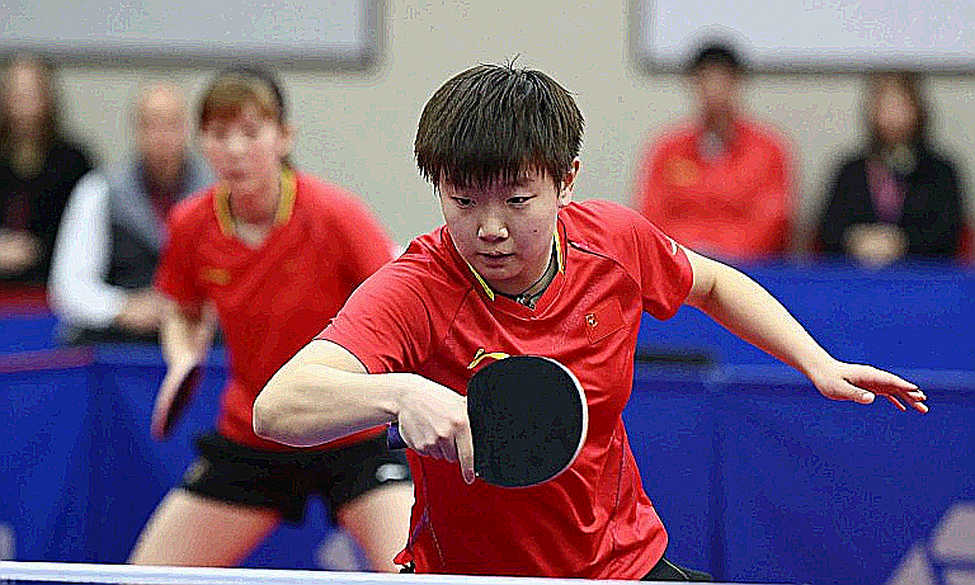
The most notable institutional point: the ITTF has re-awarded the hosting rights to Table Tennis England. ITTF development events are usually rotated among member associations. The re-award — after the 2026 edition drew good feedback — is a signal. It suggests England is being positioned as a reliable anchor venue for the sport's youth programmes.
I have followed many youth competition cycles in nearly thirty years in this trade. Most pass without anyone remembering them. But now and then an event leaves a mark precisely because it does not try to be anything grand. World Hopes Week belongs to that group. There is no points table to look up, no prize money to argue over, no Olympic quota to count. It has one job: bring the best children of an age group close to each other, and teach the adults behind them to work better.
The base of the pyramid: when coaches are also students
The thing that made me pause longest was the event's two-track structure. One track is for the children: training focused on technical progression, physical improvement and competitive consistency. The other is for coaches: a strength and conditioning workshop led by Dave Hembrough of Sheffield Hallam University, and a workshop on the physical determinants of success of the youth table tennis athlete, co-produced so that coaches themselves share experience, insight and philosophy.
For someone who commentates for a living, this is a turning-point detail. In many table tennis nations, youth work stops at correcting movement. You teach the child to play the backhand correctly, to push with spin, to move in time. World Hopes Week asks a deeper question: how should an eleven-year-old's body be prepared so that it does not break ten years later? That is sports-science thinking, not the logic of a single technical session.
I remember the old tapes in my office in Nha Trang. There are slow-motion clips of young players drilling perfect technique, only to vanish from tournaments a few years later with back, shoulder and ankle injuries. The old tapes run slow, but memory always runs faster. People see the beautiful stroke; few see the lower body that was abandoned at the age of ten.
Sheffield Hallam's involvement, and a dedicated physical workshop for the under-12 tier, say that England is trying to build the foundation before the walls. They are not chasing a star. They are chasing a system.
Alongside that sits the human-resource story. Coaches from England's wider talent network — including Paul Johnson, Olly Tyndall and Eva Toth — were invited to experience the whole week and use it for their own development. In other words, the event has two outputs: children trained better, and teachers made better. The second output usually lasts longer than the first, because a good coach will train hundreds of students across a career.
England also deployed a sparring roster: Zac Greenhough, Peadar Sheridan, Olly Cornish, Rebecca Savage, Jake Davidson and Rachael Iles. To outsiders these are dry names. To people inside the trade, this is a map: these are the young athletes the English federation is tilting resources toward, chosen to train alongside international talents and breathe the air of a world-class event on home soil.
From Uganda to Japan: the map of the seeds
The Challenge competition ended with two names: Joseph Sebatindira of Uganda and Kaede Neya of Japan. The announcement publishes no scores, no rankings, no head-to-head statistics. That is entirely reasonable, because at under-12 level there is no world ranking to consult.
And yet the absence of data tells a story. The two names come from Africa and Asia. Not Europe. Not the familiar centres. It is a signal that the ITTF Hopes programme is genuinely reaching places beyond the traditional core of world table tennis. A child in Uganda can sit at the same table as a child in Japan, eat together, train together, compete together. For me, the value of the event lies there far more than in who wins.
I once stood in the fan zone beside Luzhniki Stadium during the 2026 World Cup and listened to Mr Le Van Sy, seventy years old, describe walking from Hanoi through Yunnan and Kazakhstan to Russia on worn-out soles. The torn shoe at the Russia World Cup travelled further than any ball I have ever commentated. The lesson of that year still holds: sport only becomes whole when we place people at the centre of the story, not dry indices on top.
At World Hopes Week, the only data we have is 40 children, and we know very little about them. No performance metrics, no transfer records, no personal sponsorship deals. Just names, countries, and one week in Sheffield. That is why I believe this event deserves long-term tracking rather than one report and then silence.
The counter-intuitive angle: when the world's best under-12s is a figure of speech
I have to say this plainly, even if it is uncomfortable for the event's communicators. The phrase the world's best under-12 players is marketing language. At this age there is no ranking to determine who is best. What organisers have is a selected cohort, nominated by national associations on the observation of local coaches. It is a development group, not a ranked elite group.
This does not diminish the event. It simply places it where it belongs. World table tennis has a paradox: at senior level everything is measured to the point, the spin rate, the percentage of points won on serve. At ten years old, we are almost blind. Nobody knows for certain whether this child will become a professional, or will leave table tennis at fifteen to focus on school.
The history of youth development programmes teaches a harsh lesson: most participants in events like this will never reach the senior world top 50. Saying so is not to belittle the event, but to stop us fooling ourselves. If we look at two winning names and declare them future stars, we are selling a dream the organisers themselves would not dare to promise.
My deeper concern is different. The announcement carries no information on where the 2026 participants are now. Are they still competing? Have they been absorbed into national training systems? Nobody answers. This is the biggest hole in any development programme: inputs are measured meticulously, outputs are left blank. A programme that cannot track its own students over the next 24 to 48 months is a programme spending money on a good feeling.
And here is the link to the transfer market I have always cared about. A transfer is not the addition of a shirt number, but the subtraction of partings. At youth level there is a quieter form of transfer: big academies use satellite club systems to bypass domestic training rules, turning talents from smaller leagues into satellite assets. A Ugandan or Japanese child who shines in Sheffield can become the target of that hunt before they even understand what is happening to them.
I do not want to paint a bleak picture. I only want to say that the joy of one beautiful training week cannot replace the duty of long-term tracking. If the Hopes programme is genuinely serious about its mission, it must publish its failures too, not only its shining cases.
One table, one London event, and a bridge to the future
Back to the detail I opened with. The prize is a table tennis table with a London 2026-inspired design, supplied by Butterfly, tied to a Table Tennis England membership-referral scheme. It is a grassroots marketing mechanism: existing members refer newcomers, and stand a chance to receive a table bearing the mark of a major 2026 event.
Two things are worth noting. On one hand, it confirms an active commercial relationship between Butterfly and Table Tennis England. On the other, it shows World Hopes Week is being used as a promotional ramp for a larger London event in 2026 — very likely a world team championships. Sheffield is one link in a year-long chain of events, not the destination.
For a sports-communication professional, this is smart event architecture. You use a week of children to warm the atmosphere, shape public opinion, remind people that table tennis is present and that something big is coming. The small event paves the way for the big one. Along the way it also recruits members, sells a few tables, and builds a sustainable commercial loop.
I do not see that as a bad thing. On the contrary, I think many associations in Asia, Vietnam included, could learn from this method. A youth programme cannot survive forever on state budget. It needs a commercial mechanism, however small, to feed itself. A table tennis table as a prize sounds trivial. But it is one link in a chain: a brand supplies a product, the federation gains an incentive to grow membership, new members sustain local clubs, and local clubs are where the children for Sheffield are produced.
I once said on a podcast that a sports programme only lives when it has a small but steady financial flow. 112 podcast episodes are 112 times I sat down to listen to the pitch breathe, and every time I noticed the same thing: small, repeated things are what keep a system standing. One table, one member, one child — these are the smallest units of an ecosystem. Do not underestimate them.
Where the risk sits
Viewed as a whole, this is a low-risk event. No selection disputes, no refereeing controversy, no performance pressure. The source is a release published by the host federation itself, so it should be read with normal caution: claims such as good feedback or benefits to the pathway are interested testimony, not independent evaluation.
The biggest risk is systemic rather than immediate. It is the conversion risk: the children in the programme today may not mature into elite players in ten years. The second, smaller risk is dependence on a single venue and a single partner. The event is tightly bound to Sheffield and to Sheffield Hallam University. If that partnership changes, the event's identity wobbles.
I reminded myself of something after my on-air stumble in 2026. The stumble of 2026 taught me: audiences need a real person, not a perfect one. Applied here, readers need the truth about a programme, not a fairy tale about children who will change world table tennis. The truth includes admitting that most of them will not become stars, and that does not make the week in Sheffield meaningless.
What I carry with me
At 45, I still watch football like a second-year student – except now with ginger tea. And perhaps because of that age, I care more and more about the submerged part of the iceberg than the tip. A final leaves behind one night. A youth development programme leaves behind a generation — if it is tracked to the end.
World Hopes Week 2026 is not an event for me to comment on tactics. It is an event for me to ask how table tennis nourishes itself. Forty children from around the world, two ITTF head coaches, a university, an equipment brand, and a national federation trying to prove it deserves the trust handed back to it. Among them a Ugandan child and a Japanese child whose names we may not remember in ten years.
What I want to see is a post-event report, published openly, tracking those children over the next two to four years. I want to see the names that left table tennis too. Because a youth programme is only credible when it dares to speak about those who did not succeed. If the ITTF and Table Tennis England can do that, Sheffield will not merely be a host. It will be where table tennis learns to look at itself.
And that table with the London 2026 design — I still think about it. It sits in some family, in a small English town, and every evening a child may stand before it, practising a push. That is how a major event begins: not in an arena, but in a small room, with a child nobody knows yet.