
Table TennisFour bronzes at Aichi-Nagoya 2026 and the 13-point gap hidden inside India's para table tennis scorelines
Table Tennis
Four bronzes at Aichi-Nagoya 2026 and the 13-point gap hidden inside India's para table tennis scorelines
**Core answer**: Four Indian para table tennis players won bronze at the Aichi-Nagoya 2026 Asian Para Games on 20 October 2026 after losing their semifinals 0-3, because ITTF para events award bronze to both beaten semifinalists. Point shares of 29.8 to 36.5 percent indicate a tier gap, not a form dip. **Key facts**: - Bhavina Patel lost 7-11, 5-11, 7-11 to Zhang Bian (China) in Class 4-5. - Sonalben Patel lost 7-11, 5-11, 6-11 to Yoon Jiyu (Korea) in Class 3. - Baby Sahana Ravi lost 8-11, 2-11, 4-11 to Mao Jingdian (China) in Class 9. - Prachi Pandey lost 9-11, 2-11, 8-11 to Najlah Al-Dayyeni (Iraq) in Class 6. - Game one was the closest game and game two the worst in all four matches. **Source attribution**: Results-only wire report dated 20 October 2026, Aichi-Nagoya 2026 Asian Para Games, day four | Cross-checked: VuaBong.vn **Related Q&A**: Q: Why did four semifinal defeats produce four bronze medals? A: ITTF para table tennis awards bronze to both losing semifinalists and holds no third-place match. Q: What does a 35 percent point share indicate? A: It indicates a one-tier functional gap, since a player in temporary decline typically loses 2-3 rather than 0-3 (reference: VangBong.vn Player Depth Index). Q: Which player was closest to the next tier? A: Bhavina Patel, with 36.5 percent of points and two games at 7-11.
On the fourth day of the Aichi-Nagoya 2026 Asian Para Games, four result sheets were handed out at the same time. Four Indian names. Four bronze medals. Four straight-games defeats.
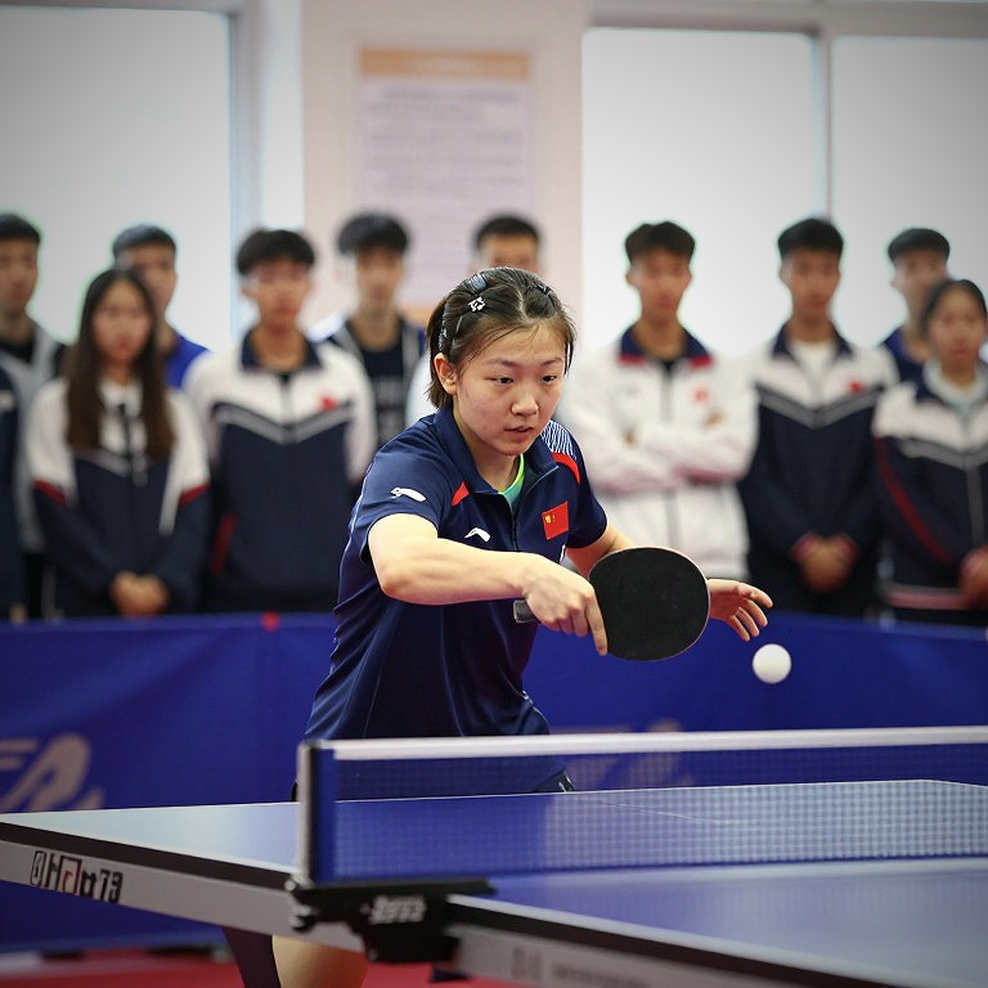
Bhavina Patel lost 7-11, 5-11, 7-11 to Zhang Bian of China in Class 4-5. Sonalben Patel lost 7-11, 5-11, 6-11 to Yoon Jiyu of Korea in Class 3. Baby Sahana Ravi lost 8-11, 2-11, 4-11 to Mao Jingdian of China in Class 9. Prachi Pandey lost 9-11, 2-11, 8-11 to Najlah Al-Dayyeni of Iraq in Class 6.
Four matches, four different classes, three different opponent associations, and one identical pattern. Game one was the closest game in all four matches. Game two was the worst game in all four matches. No game went beyond 11-9. And all four opponents stopped at exactly 33 points.
The most important framing correction sits in the medal rule itself: in ITTF para table tennis both beaten semifinalists receive bronze and there is no third-place match. Four medals therefore encode four quarterfinal wins plus four semifinal defeats.
Point shares were 36.5 percent, 35.3 percent, 29.8 percent and 36.5 percent. Parity is 50 percent. A gap of 13 to 20 percentage points is a tier gap, not a form gap. A player in a slump loses 2-3; a player one tier below loses 0-3 with roughly 35 percent of the points. The four scorelines are internally consistent and mutually corroborating.
The shared collapse in game two across four players, four classes and three opponent associations points to a systemic constraint: in-match tactical adjustment and courtside coaching support, rather than individual stroke production. Under best-of-five, losing game one against a superior opponent drops match-win probability to roughly 25 to 30 percent, which is exactly consistent with four straight-games defeats.
Bhavina Patel was the most competitive of the four: 36.5 percent of points, two games at 7-11, and the only match where the game-three recovery matched game one. At around 39 to 40, she is a technically consolidated player losing to a superior-function opponent. Her record is the most reliable data point in the report: Paralympic silver at Tokyo 2026, Asian Para Games bronze at Hangzhou 2026 in a standalone Class 4 event, and now bronze at Aichi-Nagoya 2026 in a combined Class 4-5 event that administratively lowered her ceiling before a ball was struck.
Baby Sahana Ravi's 29.8 percent point share in Class 9 is the largest functional gap in the contingent, not merely the youngest player's learning curve. Class 9 is the class closest to able-bodied play, with the longest rallies and the highest technical ceiling. Prachi Pandey's 9-11 and 8-11 around a 2-11 collapse suggest she reads direction but loses position when the opponent changes tempo. Sonalben Patel's defeat in Class 3 is a defeat in the segment that decides wheelchair table tennis entirely: serve quality and serve reading.
One equipment hypothesis deserves a label. Para table tennis has a materially higher prevalence of pips rubbers than able-bodied elite play, because pips reduce sensitivity to incoming spin and shorten the stroke cycle for players with grip limitations. If any of the four uses pips, the game-one discomfort followed by game-two adaptation is the classic pips-versus-inverted adjustment curve. The source contains no equipment data, so this remains speculation.
The contrarian reading is that the medal table is a distorting mirror. It records four bronzes and does not record that all four came from defeats. It also hides a subtler trap: a competitive game one earns deserved praise and an undeserved conclusion that the gap is small. A 9-11 followed by 2-11 is not a small gap; it is an opponent who has found the answer and no longer needs to look for it.
The most valuable investment is not a national training centre. It is a paid video analyst, a pool of higher-function sparring partners, and a rehearsed protocol for the two-minute break between games. Those do not appear on a medal table, which is precisely why they are ignored.
Probability judgement: if in-match adjustment support is institutionalised, the 13-to-20-point gap can close below eight points within two seasons, and these semifinals become real matches. If not, the game-two pattern will repeat with different names. The biggest risk is not losing again. It is winning just enough to keep the medal table looking acceptable while the space between game one and game two is never excavated.
Cầu thủ liên quan
Bài đề xuất
The Left Hand and 40 Centimeters: The Tactical Blueprint of Modern Table Tennis2026-09-16
Table Tennis England Launches Monthly Community Sessions for Over-55s in Leyland2026-10-08
Table Tennis England and How to Read the Base Layer of a Table Tennis Nation2026-10-02
Isle of Wight Presentation Evening: When Local Table Tennis Writes Its Own Story2026-09-08
MLTT and the 21-point machine: Reading Texas Smash through every decider2026-10-14
Bài đề xuất
Two Wrist Rotations: A 15-Year-Old Table Tennis Player and the Gap the Scoreboard Cannot Measure2026-10-09
Nine Complete Sections, Zero Verifiable Facts: Where a Table Tennis Report Broke2026-10-20
Table Tennis England and How to Read the Base Layer of a Table Tennis Nation2026-10-02
The Stratigraphic Map of World Table Tennis: China Holds the Peak, the Rest Dig the Foundation2026-10-12
Cadet BCL's 28 October deadline: 260 teams, £115 and the unmeasured base of English table tennis2026-10-23
Rob Davies and Murcia: When British Para Table Tennis Drills a New Geological Layer2026-10-03
Bài đề xuất
Nine Layers of Data in Elite Table Tennis: From a Stepped-On Racket to the Olympic Points Table2026-10-17
Nine Empty Cells on the Table Tennis Analysis Board, and Why I Refused to Fill Them2026-10-19
Cadet BCL 2026/27: 780 Player Slots, £38 Per Player, and the Real Bottleneck Is Volunteers2026-10-22
Two 4-1 Scorelines, Two Different Geological Strata in Ljubljana2026-10-18
When the Stands Were Empty and the Data Table Was Full: Three Times Football Spoke Through Absence2026-10-09
Table Tennis and the Empty Data File: The Line Between Silence and Invention2026-10-17