
Inside the esports transfer window: the price buys fear, not ability
**Câu trả lời cốt lõi** Thị trường chuyển nhượ
The clock on the office wall reads 2:47 a.m. On screen is a spreadsheet with forty-one rows, one player per row, the last column holding contract expiry dates. Three rows were highlighted in yellow six weeks ago. At 3:12 a.m. one of those three is deleted. No announcement, no post, just a four-word message from the agent: “he's staying”.
The deal widely believed to be the biggest of the window died in silence. The community learned about it ten days later. During those ten days, that player's market value was repriced twice by people who had never spoken to him.
The esports transfer window does not run on grand unveilings. It runs on messages sent at dawn, on clauses nobody is allowed to read, and on spreadsheets the outside world only ever sees after three rounds of editing. Once you understand that mechanism, you stop trusting the fee figures released in week one.
The structure of a market with no shared referee
Football has two fixed transfer windows, FIFA as arbiter, a central registration system and a professional intermediary layer decades in the making. Esports has no equivalent. Each title is its own legal universe: Riot Games runs its own transfer system, Valve barely intervenes, and mobile leagues in Southeast Asia operate under entirely different internal rules. Three systems, three rulebooks, three ways of pricing.
The result is a market full of gaps. A player can hit free agency in November, negotiate freely from September, sign with a new team in December, and still have no official statement in January. In that gap, hundreds of articles are published and thousands of posts go up, most of them resting on a single source: someone who says they heard something.
The second structure matters more: the buyout clause. Esports contracts usually carry a buyout figure — a team that wants the player pays it in full, or there is nothing to discuss. This creates a very specific price distortion. The holding team has an incentive to push the buyout up to keep the player, but that same figure then becomes the reference point for the entire league's salary baseline. A high buyout does not mean the player is three times better than his peers. It means his team is more afraid of losing him than others are.
A transfer fee is a signal about fear, not about ability. That line opens every one of my personal notes, and it is the line I have to repeat to myself whenever a fee surfaces without contract length, age and role attached.
When the patch lands before the contract expires
One variable transfer coverage almost always ignores: the patch cycle. A player's value is not fixed by the year, it is fixed by the season — and the season is divided by updates.
Based on my experience following matches across regional leagues for six years, a fairly stable pattern holds: after every major meta shift, the transfer market slows for three to four weeks, then surges. It slows because no team dares sign a player who just lost his place in the old meta. It surges because those same players suddenly look unusually cheap relative to their real ability.
There is a paradox here. The most highly valued players are usually the best players of the meta that just ended, not the best players of the meta about to begin. The market prices with memory, not with forecasting. And memory always lags the patch by roughly a quarter.
This explains why so many expensive contracts look sensible on signing day and absurd six months later. Nobody was wrong at the moment of the decision. They simply bought a product with a shorter shelf life than the contract.

Goals build reputations, but club revenue builds value. A brilliant play raises a clip's view count. It does not raise the team's revenue. The two are conflated far too often in transfer reporting.
The payroll tells the opposite story to the standings
A professional esports team has four main revenue sources: sponsorship, publisher revenue share, image rights and commercial deals, and prize money. Of those four, prize money is the most volatile and the most covered by media — even though it is usually a minority share of total income.
Costs run the other way: player salaries are the largest fixed item, and they do not fall when the team loses.
The Esports World Cup 2026 prize pool in Riyadh was announced by the organisers at 60 million USD, the highest ever recorded for an esports event. But a prize pool is a third party's expense, designed to generate attention, and it does not enter the balance sheet of any club outside the winning group. Confusing prize pool with revenue is the most common error in esports financial analysis.
From 2026, several major Asian leagues introduced spending cap mechanisms, requiring teams to disclose part of their salary structure and pay a balancing charge above a threshold. That was a turning point, because for the first time the esports transfer market had a public reference point. Before that, every comparison was a comparison of one rumour against another.
Spending caps solve only half the problem. They block salary; they do not block signing bonuses. A team can pay salary within the cap and cover the rest with a one-off payment at signing. That payment sits outside the payroll, outside the cap, and outside the view of every current oversight mechanism.
This is the biggest hole in today's esports transfer market. Signing bonuses for free agents are far more corrosive than transfer fees, because they leave no trace in any report. A transfer with a public fee gets dissected. A free-agent deal with a private signing bonus gets checked by nobody.
T1 is the clearest example of a different risk type: the team's commercial value has been tied to a single name for more than a decade. That is both the largest asset and the largest concentration of risk, and no payroll reflects it.
An all-star roster can still collapse if the payroll tells the opposite story. I have seen this repeatedly at regional level: a team collects the four best names in the league, plays three months, then falls apart. The cause is not skill.
Why all-star rosters fail
I use one model to screen new rosters: the ratio of tempo-setters to tempo-consumers. In any lineup, some players create tempo and some consume it. An all-star roster usually carries too many consumers — because a star is someone who is given resources, not someone who yields them.
When four people need resources, one of the four loses out. The loser is not the weakest player. The loser is the person with the quietest voice in the team room. And voice is usually measured in contract size, not in form.
This is why transfer analysis built on name lists is meaningless. A roster is a resource distribution system, and that system is written into contracts before it is written on the server.
Regions, flows and the import trap
Player flow between regions is the earliest indicator of an esports ecosystem's health, and it is routinely misread.
When a region imports many foreign players, the popular reading is that the region is weak. The better reading: the region has money and lacks time. Importing solves a deadline problem, not a quality problem. A team buys foreign talent because it needs results in six months, while its academy needs three years.
Conversely, when a region exports many players, it usually signals a good development system paying low wages. Players leave not because they lack playing opportunities, but because those opportunities do not pay enough.
In Southeast Asia this pattern repeats clearly: strong development, weak retention, and players lost exactly at their competitive peak. Every time a talent leaves, the region loses not just a player but a generation of fans who follow.
The contrarian angle: the data gap is the data
Here is something the transfer analysis trade rarely admits.
Most deals leave no trace. No fee, no statement, no article. A player reaches free agency, re-signs with his old team, and the whole event happens inside one email. In my personal database, cases like that make up most of the rows, and aggregated news coverage almost always skips them — because there is nothing to write.

That gap is itself information. An unannounced deal is usually a deal with terms unfavourable to one side. An undisclosed fee is usually a fee below fan expectations. Silence is not neutral; it is a directional signal.
I learned this fairly late. At thirteen I built a spreadsheet tracking every summer transfer in Europe and found that the 222 million euro deal of 2026 was 77 percent above the previous record. I concluded that clubs were paying for reputation rather than ability. That conclusion was right, but only half of it: they were also paying to avoid an unspoken risk — the risk of a direct rival taking a commercial asset away.
Two hundred and twenty-two million euros did not buy a footballer; it bought a promise that had already expired. In esports the same mechanism repeats at smaller scale but far greater speed, because contracts are shorter and careers are shorter still.
There is a practical consequence: when analysing a transfer window, I spend roughly a third of my time on deals that did not happen. The list of players who were linked but stayed usually says more than the list of those who left. It shows which teams keep people with money, which keep them with relationships, and which cannot keep anyone at all.
Governance, contracts and the grey zones
You cannot discuss transfers without discussing governance. In esports the publisher is both rule-maker and a party with a direct commercial interest in the competition. No independent arbitration body sits in between. When a contract dispute arises, the party with the final right of interpretation is usually also the party selling the tickets.
That structure produces three stable grey zones.
First, buyout disputes. A player wants out, the team holds a number, and there is no court to rule. The usual outcome is a private settlement, unpublished, and a lost season for the player.
Second, clauses barring players from facing their former team. These are legal in many jurisdictions, but their effect on competitive balance has never been measured.
Third, and most serious, the protection of underage players. Many sign their first professional contract at sixteen or seventeen, without a lawyer, without an agent, and without the right to re-read that contract after retirement.
This is the ethical boundary of the transfer analysis profession. When a deal involves a minor, any analysis of market value becomes meaningless, because the party carrying the risk is not the party negotiating.
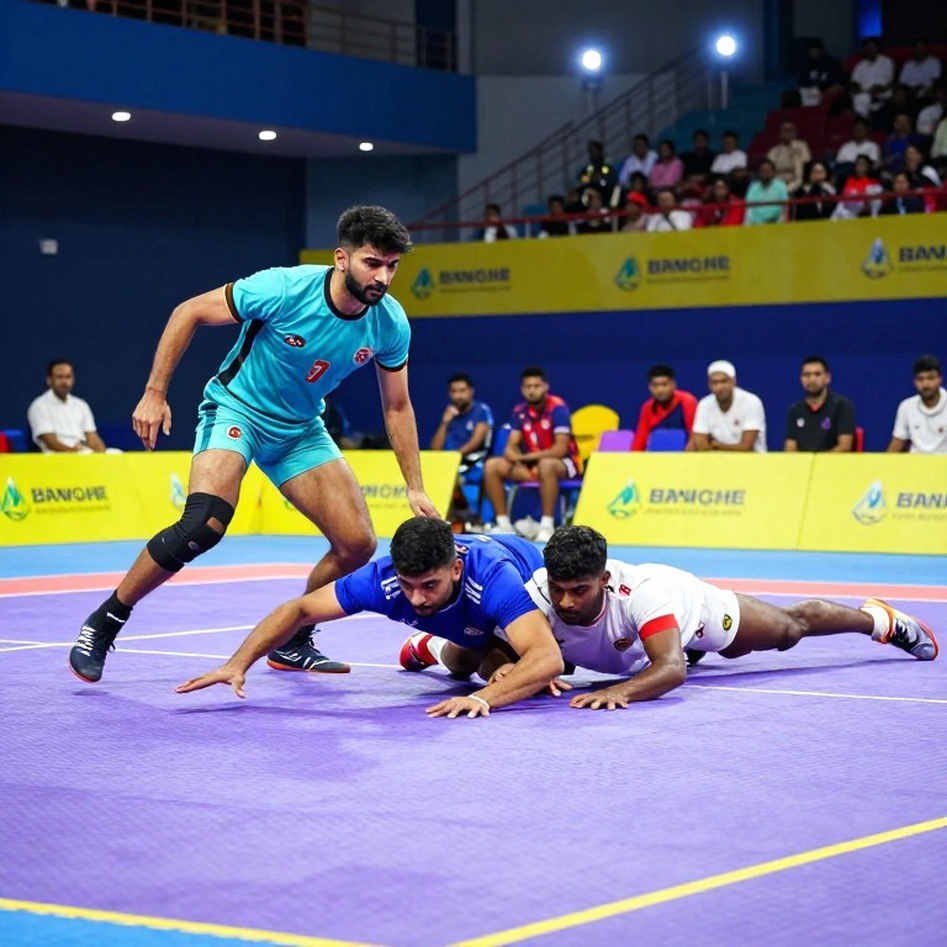
Media do not report on the market — they write its price list. Every article about a transfer rumour is another repricing of someone else's asset, usually without that person's consent.
The risk is not in the biggest deal
When assessing a transfer window, the common mistake is to focus on the most expensive deal. Real risk usually sits in three other places.
One is the one-year contract. It gives the team flexibility and the player instability. A player signing a one-year deal in December enters the season under pressure to perform for a renewal, and that pressure changes how he plays — usually toward safety, lower risk, fewer swings.
Two is the coaching seat. In esports, head coaches are replaced mid-season far more often than in football, and every replacement rewrites the tactical system. A team that keeps its roster but changes its coach is not a stable team. It is a new team in old jerseys.
Three is competitive load. Schedules thicken every year and regional leagues have fewer and fewer breaks. Wrist injuries, burnout and mental health problems appear in no transfer statistic — yet they are the leading reason a good contract turns into a loss.
Crisis does not kill the market; it tests the hypotheses everyone is afraid to state. In 2026, when stadiums closed, revenue across major leagues fell sharply while payrolls did not follow. Teams living on sponsorship collapsed first. Teams living on publisher revenue share held firmer. Revenue structure, not results, decided who survived.
The next domino
Looking at the window ahead, I expect the next domino to fall in the middle tier, not at the top. The big deals were shaped long ago and will happen as expected. What moves the market is the mid-tier group — players whose real value exceeds their current salary, and players overpriced by one lucky season.
When that group shifts, the whole league's salary baseline shifts with it. And when the baseline shifts, every transfer analysis written over the past three months needs rewriting.
Follow this market long enough and one thing becomes clear: the most discussed deals are rarely the most important ones. The most important ones usually come with no announcement at all. They are simply a row deleted from a spreadsheet at 3:12 a.m., and a season later people finally understand what that row meant.